
Custom Molded Polyurethane Parts and Products
For any application requiring wear, impact, or abrasion resistance
When off-the-shelf parts fail or don’t exist, we engineer and mold custom polyurethane components to your specifications. From a single prototype to ongoing production, with in-house mold design and build.
Request a quote for this partTechnical specifications
- Material
- Cast PU, custom formulations
- Shore hardness
- 60A – 75D
- Sizes
- Custom to drawing or sample
- Temperature range
- -40°C to +80°C
- Bonding
- Metal, plastic, or standalone
- Volume
- Prototype to production runs

Custom polyurethane products from drawing to component
Willsup develops custom molded urethane parts from a drawing, sample or wear problem. A bushing, guide or protective component must fit its assembly and withstand its operating conditions. The drawing defines the interfaces; the application description guides material selection.
Custom molding capabilities at a glance
| Capability | What Willsup offers |
|---|---|
| Molding processes | Open casting, compression molding and injection molding |
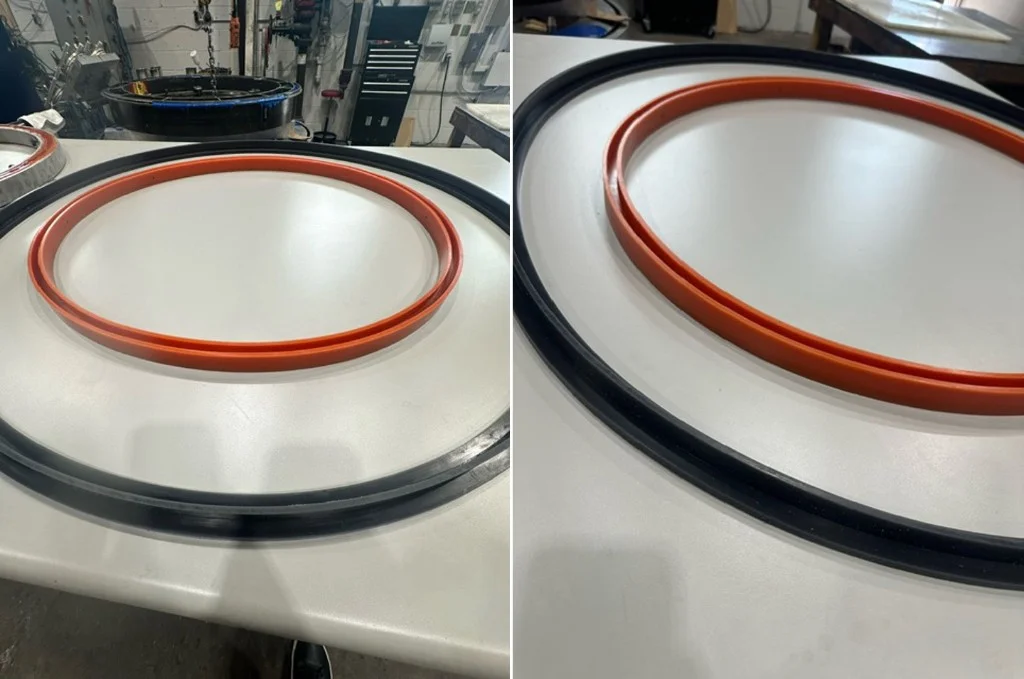
| Part size | Custom to drawing or sample; precision machining up to 80″ diameter |
| Tolerances | Defined on your drawing and confirmed during mold design, with machining where critical dimensions require it |
| Shore hardness | 60A to 75D, with formulations tailored to the application |
| Quantities | No minimum order: from a single prototype to production runs of thousands of parts |
| Prototyping | Drawing to prototype in days |
| Metal bonding | Chemical bond to steel, aluminum and stainless steel |
| Operating temperature | -40°C to +80°C |
Hardness is the first property to set; our polyurethane Shore hardness chart shows how each range behaves in service.
Custom polyurethane tooling and molds
Every custom molded polyurethane part starts with its tooling. Willsup designs and builds its molds in-house, in Pointe-Claire, Quebec, so the mold is engineered around your part rather than adapted from a catalog shape. Mold lead time depends on part complexity and is confirmed at the quote stage.
The molding process is selected for the geometry, quantity and tolerances involved:
- Open casting suits prototypes, large parts and short runs, where tooling must stay simple and quick to produce.
- Compression molding gives repeatable geometry on recurring parts and production quantities.
- Injection molding is used where the part design and volume justify it.
Because tooling, casting, metal-to-polyurethane bonding and machining are handled under one roof, design changes found during prototyping can be made to the mold directly, without waiting on an outside tool shop. Approved molds stay on file, so a repeat order is made to the same geometry and formulation as the validated part.
What to include in your quote request
Send dimensions, critical tolerances, quantity, temperature, fluid exposure and duty cycle. For a failed part, include photographs and identify the failure mode: cracking, abrasion, deformation or debonding. Specify traceability requirements and any inspection or test records you need.
Molding, inserts and finishing
Project review establishes the geometry, mold requirements, possible inserts and surfaces that need machining after casting. A metal-bonded component also requires defined interfaces and substrate preparation. The manufacturing process and lead time are confirmed for the project.
Validate the prototype before production
Agree on dimensional and functional acceptance criteria. Check fit in the assembly and performance in service before finalizing the production specification. Nominal hardness alone cannot establish whether a replacement solves the original failure. For repeat orders, retain the approved drawing revision and material specification.
Custom polyurethane molding applications
Custom molding is the answer when a standard part does not exist, no longer exists, or does not last. Typical applications include:
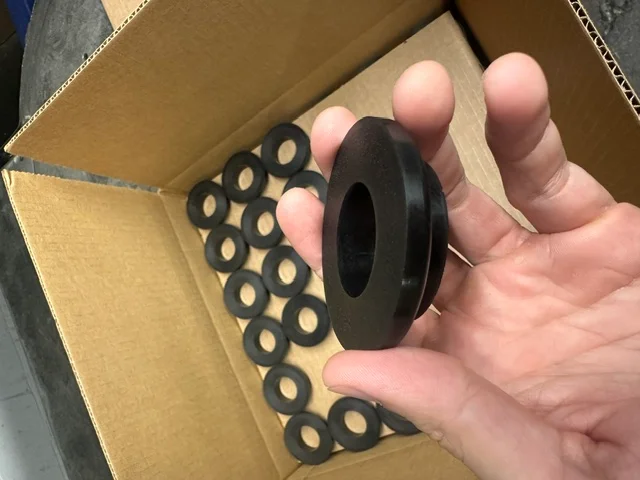
- Replacement for discontinued parts, reproduced from a worn sample or an original drawing when the equipment manufacturer no longer supplies them.
- Parts that fail in rubber or UHMW, recast in a polyurethane formulation selected for the wear, impact or abrasion that caused the failure.
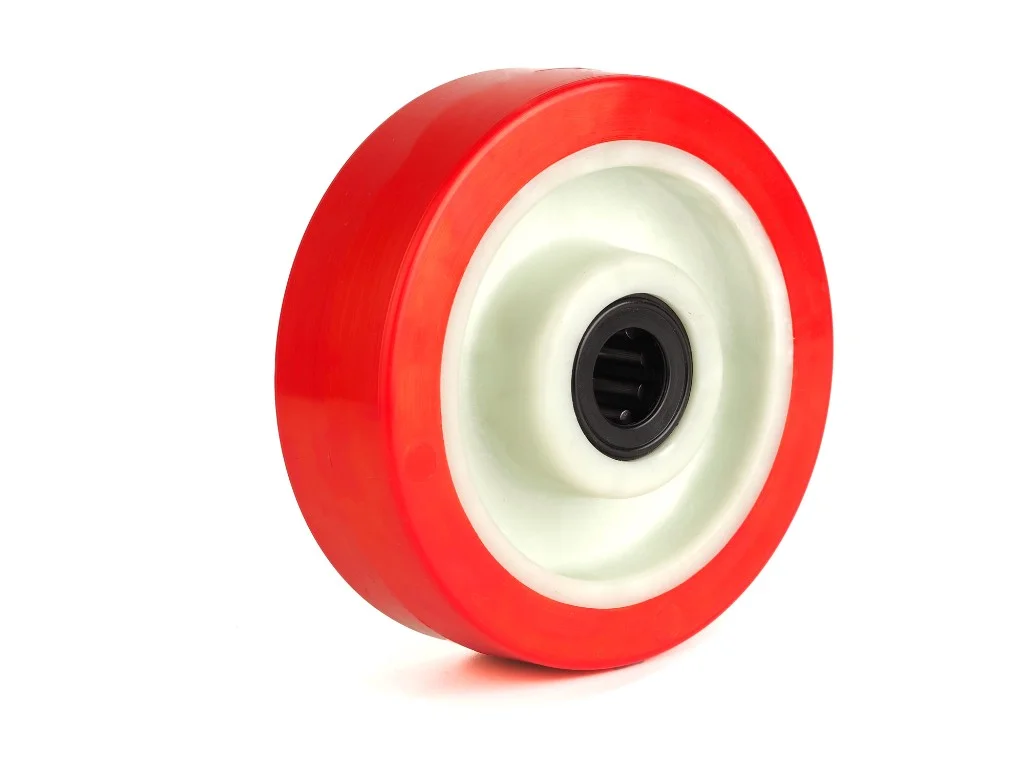
- OEM components molded to your specification, from new-equipment prototypes to recurring production; see our OEM manufacturing page.
- Snow removal wear parts such as plow blades, scraper and squeegee blades, deflectors, flaps and skid shoes, detailed on our snow removal page.
- Mining and aggregate wear parts such as wear pads, bumpers and guards for equipment exposed to impact and abrasive material; see mining and aggregates.
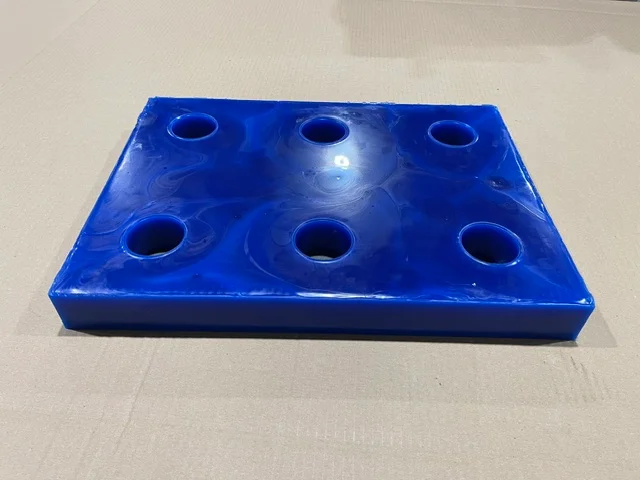
- Metal coil storage, with polyurethane coil saddles, pads and cradles shaped to the coil they support.
In each case, the starting point is the same: the part's interfaces, its operating conditions and the failure mode it must solve. That information drives the formulation, the mold and the finishing steps.
Formulation selected for the part
The mold sets the geometry; the formulation sets how the part behaves. Willsup formulates and casts its polyurethane compounds in-house, from soft, shock-absorbing grades to hard, abrasion-resistant ones across the 60A to 75D range. Typical tensile strength runs from 3,000 to 8,000 psi, and our formulations resist oil and water.
Where polyurethane is not the right material, for example under strong chemical exposure, we also work with NBR and Viton. The choice is made from the operating conditions you describe: load, impact, abrasion, temperature and the fluids the part will contact.
Custom molded polyurethane vs rubber, steel and UHMW
Many custom molding projects start with a part that already exists in another material and fails too soon. Before choosing polyurethane, it helps to know where it outperforms the alternatives and where it does not.
- Rubber offers good impact damping at a low initial cost, but only moderate abrasion resistance. Polyurethane typically lasts longer under sliding wear, heavy loads and oil exposure. Rubber remains the better choice for sustained high temperatures and some aggressive chemicals.
- Steel has high abrasion resistance but poor impact damping; it is heavy, noisy and transmits shock to the equipment. Polyurethane absorbs impact and protects the mating surface.
- UHMW is light and slides well, but its abrasion and impact resistance are low. It suits low-wear sliding surfaces; polyurethane suits parts exposed to impact and abrasive material.
Our polyurethane vs rubber comparison and our materials page go into more detail. If a part is failing in rubber or UHMW, send it with a description of the failure; the material choice is reviewed before a mold is built.
How a custom molding project runs
- Share specs. Send dimensions, drawings, a worn part or the operating conditions so the application can be defined.
- Design the mold. We engineer the tooling and confirm geometry, tolerances and material approach before production.
- Casting and finishing. Parts are cast and bonded to spec. Many come out of the mold ready to use; precision machining is done in-house when the application requires it.
- Quality control and delivery. Each run is checked before shipping, so finished parts arrive ready for installation.
This sequence is the same for a single prototype and for a production run. Only the tooling approach and the inspection plan change with quantity.
Find the right product family
Explore polyurethane rollers, urethane bumpers and compression springs for application-specific requirements. For blanks intended for machining, review urethane tubes and polyurethane bar stock. Include your drawing with your quote request.
Where custom molded parts are used
- Replacement for discontinued parts
- New equipment prototyping
- OEM components
- Wear-critical applications
- Parts that fail in rubber or UHMW
Why source custom parts from Willsup?
- No minimum order quantity
- In-house mold design and build
- Drawing to first part in days
Related products
Questions about custom molded parts
-
What information do you need to quote a custom part?
A drawing with dimensions, a sample, or a description of the application and the problem you are trying to solve. The more detail, the faster and more accurate the quote. -
What is the minimum order quantity?
There is no minimum. We produce single prototypes through to production runs of thousands of parts. -
Can you improve on an existing part design?
Yes. If your current part is failing, we can analyze the failure mode and recommend material or design changes to extend service life. Send us the failed part and we will assess it. -
Which molding process will you use for my part?
It depends on the geometry, quantity and tolerances. Open casting suits prototypes, large parts and short runs; compression molding gives repeatable geometry for recurring production; injection molding is used where the design and volume justify it. We confirm the process, and the mold lead time, when we quote your part. -
Can you reproduce a part from a worn sample?
Yes. We can reproduce a part from a worn sample, a drawing or an OEM specification. Send photographs and, where possible, the part itself, and describe how it failed so the replacement formulation addresses the cause, not just the geometry.
Ready to spec your part?
Tell us your load, size, and operating conditions and we will recommend the right formulation.
Request a quote for this part