
Custom Polyurethane Bumpers
Urethane impact stops and contact pads for industrial equipment
Specify a polyurethane bumper around the contact it needs to manage. Willsup reviews drawings and samples for custom industrial stops, protective pads and replacement bumpers, with geometry and formulation selected for the mounting arrangement and operating conditions.
Request a quote for this partTechnical specifications
- Material
- Cast polyurethane
- Profile
- Round, rectangular or custom, subject to review
- Mounting
- Defined by the assembly drawing
- Deflection
- Application-specific
- Formulation
- Selected for contact and exposure
- Manufacturing
- Pointe-Claire, Quebec

Define the event the bumper must handle
A bumper used as a positioning stop has a different requirement from one repeatedly struck by moving equipment. Describe the moving mass, approach speed, contact frequency and available stopping travel. Also identify whether the bumper remains compressed between cycles.
Required stopping performance must be evaluated for the assembly. Hardness and external dimensions alone do not establish impact capacity, and a protective bumper should not be treated as a certified safety stop without the necessary validation.
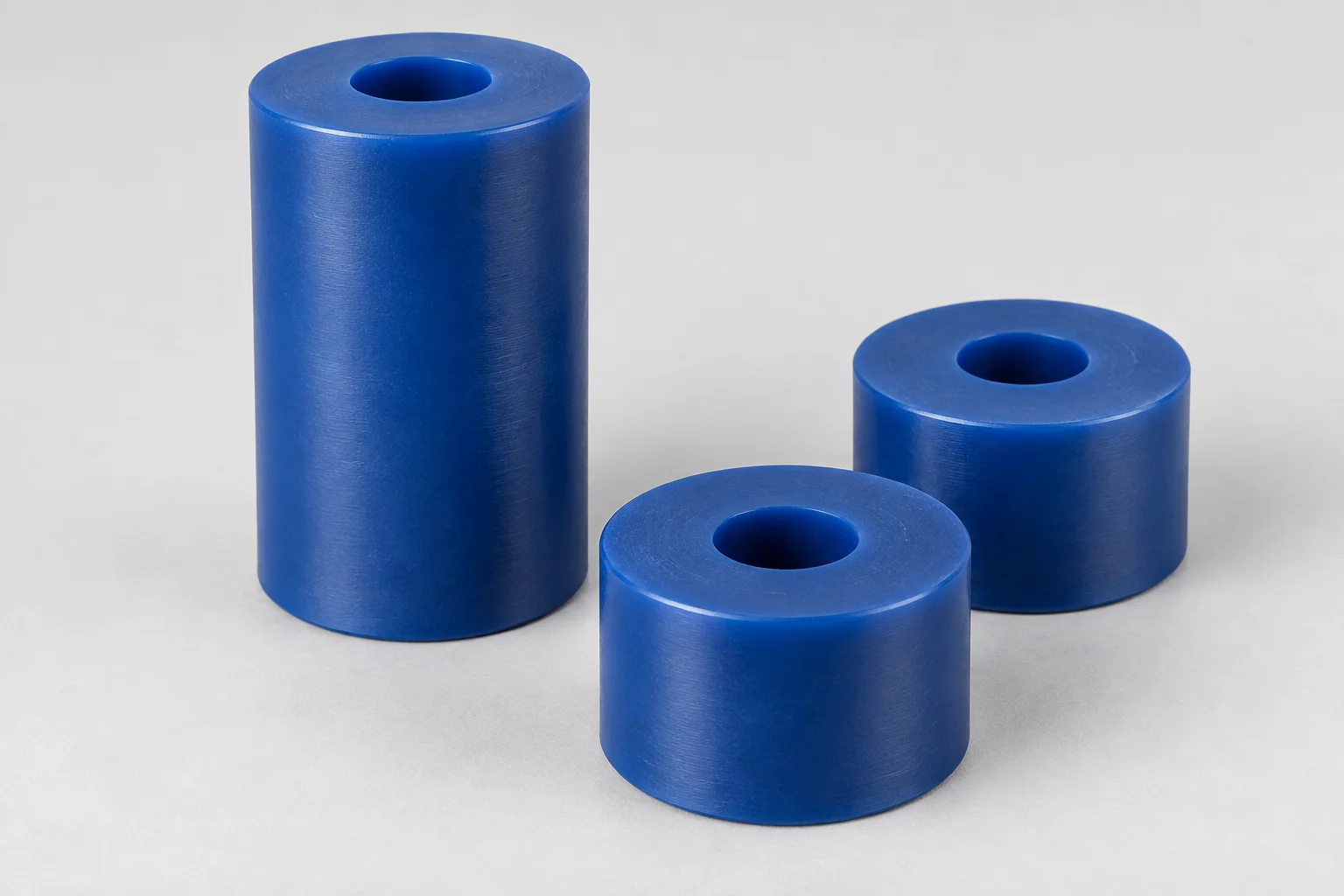
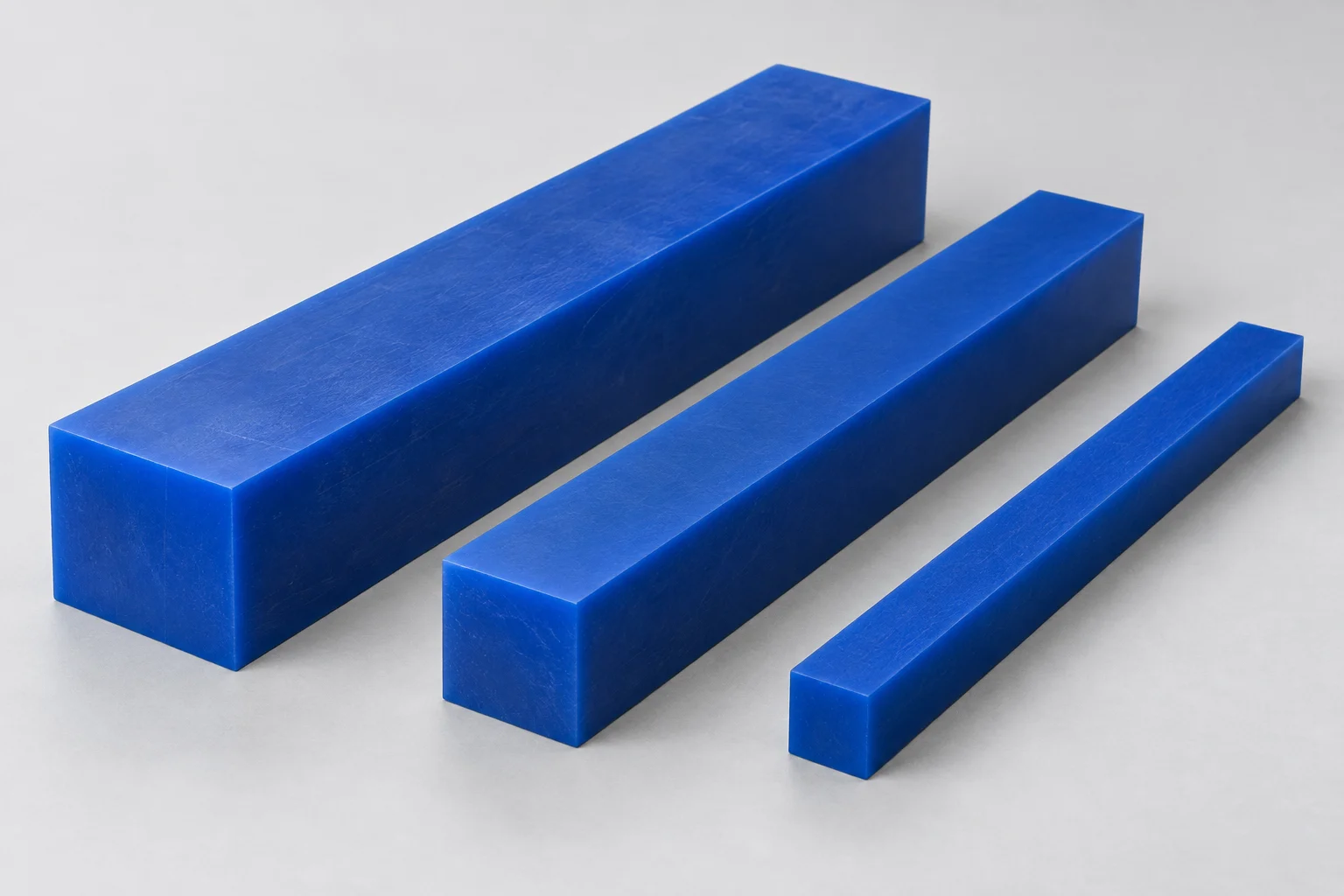
Round bumpers, rectangular stops and mounted components
| Configuration to discuss | What to include |
|---|---|
| Round contact bumper | Diameter, height, contact profile and fixing method |
| Rectangular stop | Contact area, thickness, hole positions and edge clearances |
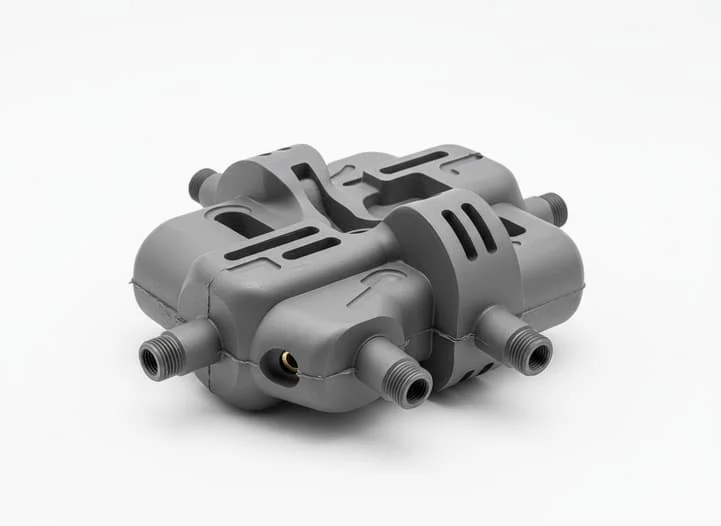
| Stud or plate-mounted component | Insert drawing, thread details, base material and attachment loads |
| Replacement part | Sample, mounting dimensions and photographs of the damage |
Insert, plate and stud requirements are reviewed with the design. Do not assume the mounting details of a catalogue part match an existing machine.
Replace a worn bumper with a defined specification
Send the original drawing where available and explain why the current part is being replaced. Cracking, permanent deformation, loose mounting and surface wear provide different information about the application. A worn sample helps show the profile, but may no longer represent the original height or contact geometry.
Polyurethane and rubber: compare in the application
The choice depends on the contact, temperature, exposure and required deformation. Provide the existing material and observed service interval. A meaningful comparison uses the same operating conditions and an agreed measure of acceptable wear or deformation rather than a universal service-life multiplier.
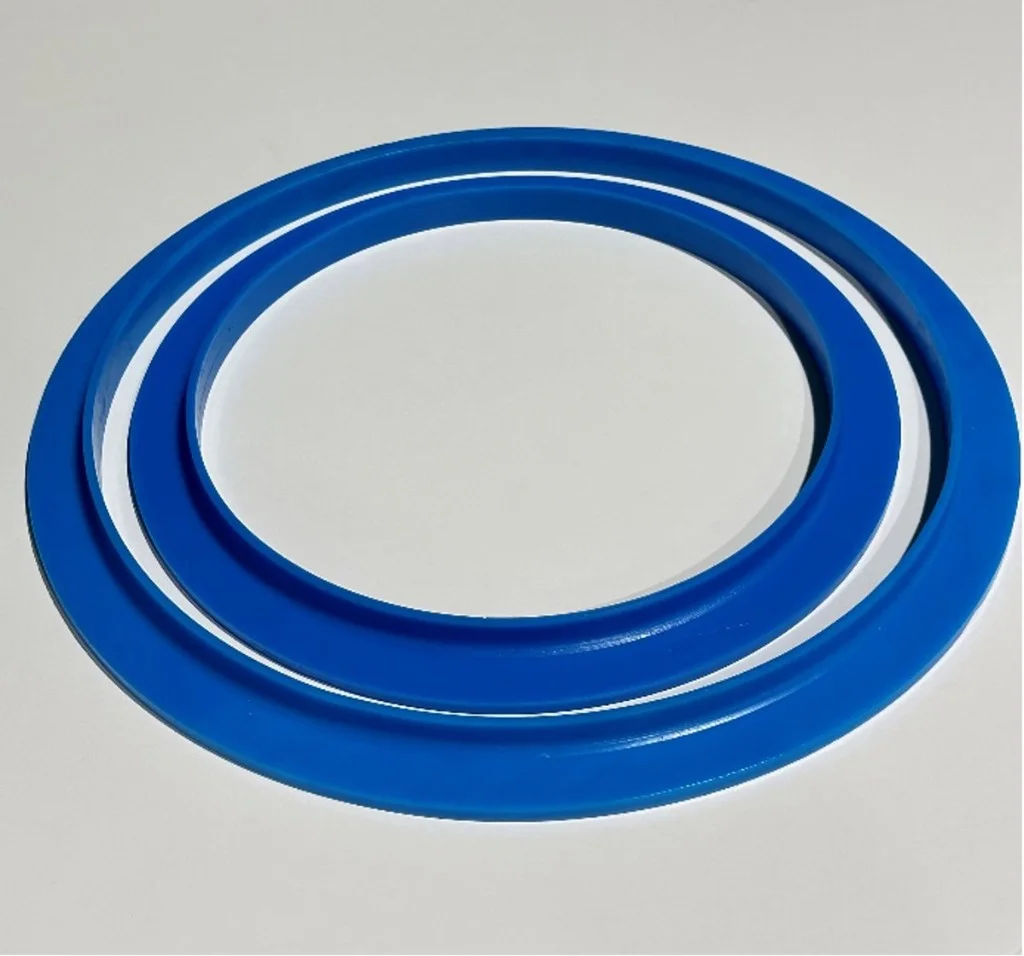
For a component selected to provide a defined return force through a stroke, explore polyurethane compression springs. For seals and gaskets, see our sealing and contact components.
Prepare your bumper quotation
Include a drawing, quantities, delivery date and operating description. Specify contact material, impact conditions, mounting loads, available travel and environmental exposure. The quotation establishes the component scope, tooling and any validation required for the project.
Your project with Willsup
Our manufacturing capabilities in Pointe-Claire bring together mold design, polyurethane casting and finish machining. Send your drawing or sample with the service conditions so we can review feasibility, material requirements and the manufacturing approach before confirming a quotation.
Applications to discuss
- Machine contact stops
- Material handling bumpers
- Protective pads
- Replacement OEM components
Custom manufacturing with Willsup
- Start from a drawing or sample
- Formulation selected for service conditions
- In-house mold design
- Casting and finishing to project requirements
- Manufacturing in Pointe-Claire, Quebec
- Quantity and schedule confirmed with your quote
Common questions
-
Can you reproduce a worn urethane bumper?
Send the sample, mounting dimensions and operating details. Original drawings help establish the intended geometry where the old part is deformed or worn. -
Can a bumper include a threaded stud?
Include the stud or insert specification and mounting requirements in your enquiry. Construction feasibility is reviewed before confirming the part. -
What hardness should I specify?
Supply the contact and loading conditions with any existing material reference. Hardness is considered with geometry, deformation and environment. -
Is a polyurethane bumper also a spring?
Both can deform under load, but their specifications differ. A spring is selected around a force-displacement function; an impact stop must address the contact event and assembly requirements.
Ready to spec your part?
Tell us your load, size, and operating conditions and we will recommend the right formulation.
Request a quote for this part