
Static vs. dynamic polyurethane seals
Static polyurethane seals close the gap between stationary parts, while dynamic seals withstand movement, friction and heat. The right choice depends on pressure, travel and Shore hardness. A static seal prioritizes sealing; a dynamic seal prioritizes wear resistance.
Static polyurethane seals close the gap between stationary parts, while dynamic seals withstand movement, friction and heat. The right choice depends on pressure, travel and Shore hardness. A static seal prioritizes sealing; a dynamic seal prioritizes wear resistance.
Choosing the wrong seal is expensive: lubricant leaks, contaminated bearings and unplanned production stoppages. Yet the first question is simple. Does the part being sealed move, or does it remain stationary?
This distinction between static and dynamic service guides every decision, from the seal profile to material hardness. Understanding it prevents premature replacement and rapidly rising maintenance costs in industrial environments.
Understanding the difference between static and dynamic seals
A static seal closes the gap between two surfaces that do not move relative to each other. Think of a flange, a bolted cover or a closed housing. Because nothing rubs, friction and heat are rarely major concerns.
A dynamic seal experiences continuous relative motion: the reciprocating travel of a rod, the rotation of a shaft or cyclical compression. This motion generates friction, heat and abrasive wear. The material must therefore be stronger and more resistant to fatigue.
As industry specialists explain, the key differences between static and dynamic seals mainly concern wear tolerance, lubrication and the need for tight tolerances. A static seal can tolerate slight misalignment; a dynamic seal is much less forgiving.
Polyurethane performs well in both roles. Its unusual combination of hardness, elasticity and abrasion resistance makes it a strong option for stationary sealing and repeated movement alike.
When to choose static polyurethane seals
Static polyurethane seals suit any location where two components stay fixed but must remain fully sealed. The priority is low compression set, meaning the seal’s ability to recover its shape after prolonged compression.
A lower hardness is often acceptable because no abrasive motion attacks the sealing lip. The goal is instead to maintain stable contact pressure over time.
Typical static industrial applications include:
- Flanges, covers and blanking plates
- Closed bearing housings and gearboxes
- End plugs and fittings with little movement
- Metal-to-metal interfaces sealed against dust or moisture
For these applications, a range of custom-moulded industrial seals provides a precise fit instead of relying on a standard profile that may allow contaminants through.

Dynamic applications and movement requirements
Dynamic applications expose seals to constant mechanical stress. A sliding hydraulic rod, rotating shaft or vibrating component generates friction and heat. Abrasion resistance and elastic recovery become decisive in these locations.
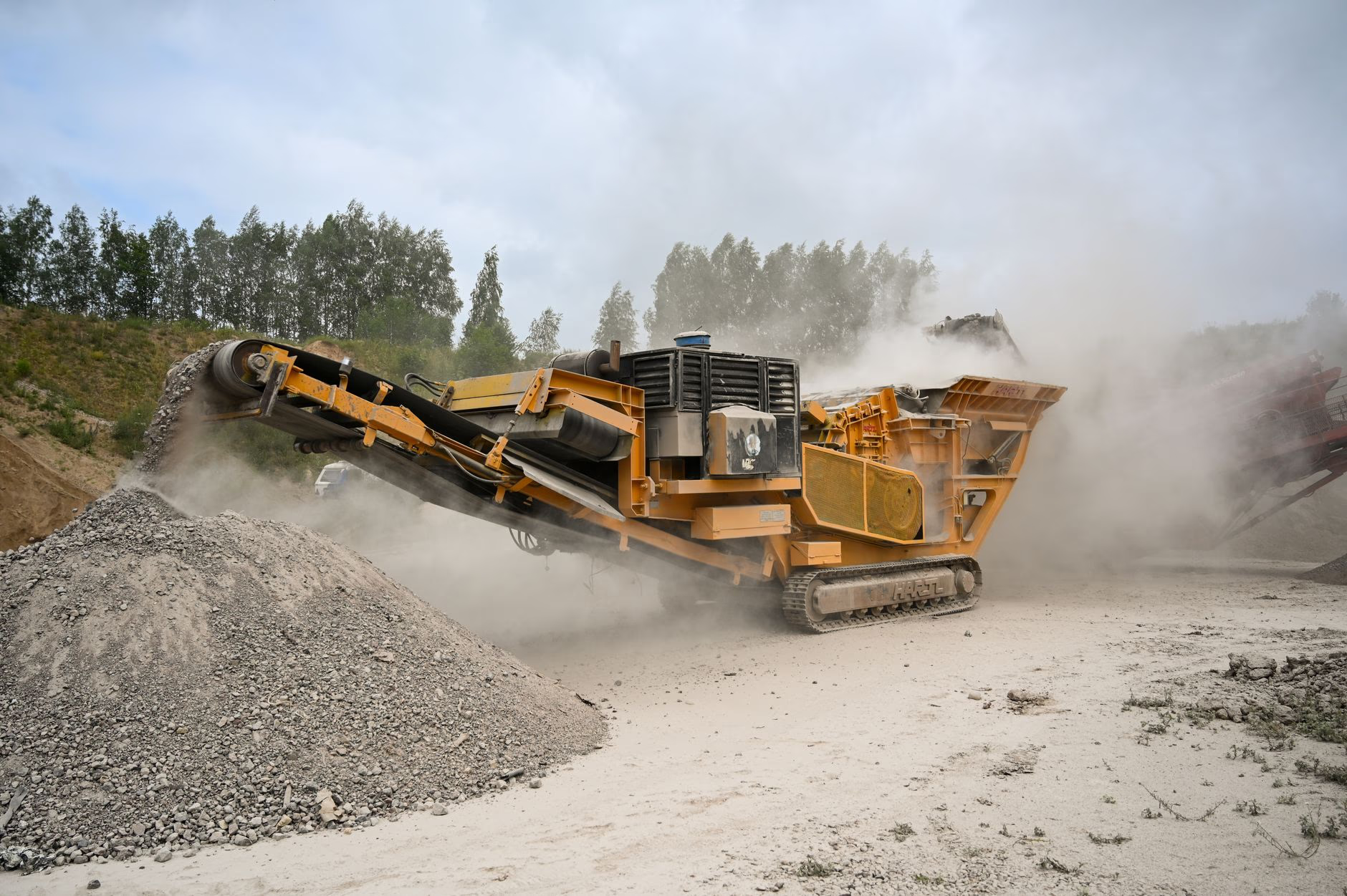
Crusher dust rings are a good example of semi-dynamic service. Installed around the bearings of gyratory and cone crushers, they follow the shaft’s eccentric motion while blocking mineral dust. Our custom dust seal rings must maintain reliable contact despite vibration and changing loads.
Three factors carry particular weight for a dynamic seal:
- Lubrication, which is critical for removing frictional heat
- The counterface finish, which must be neither too smooth nor too rough
- The lip geometry, optimized for the specific equipment
As a reference guide to static and dynamic enclosure seals explains, a dynamic seal must dissipate heat effectively or the material will degrade prematurely. Polyurethane meets this need, and bumpers and gaskets use the same material performance to withstand repeated impact.
Shore hardness and pressure when choosing a seal
Shore hardness, measured with a durometer under ASTM D2240, guides much of the decision. Industrial polyurethane components generally range from Shore A 40 to 95, covering soft sealing through severe-wear resistance.
A harder material distributes loads more effectively and resists extrusion under high pressure, but provides less vibration damping. A softer material conforms to imperfect surfaces more easily, at the cost of lower abrasion resistance. Our Shore hardness guide explains these trade-offs for each type of component.
| Criterion | Static seal | Dynamic seal |
|---|---|---|
| Relative movement | None | Reciprocation, rotation or vibration |
| Typical Shore hardness | A 50 to 80 | A 70 to 95 |
| Main priority | Long-term sealing, low compression set | Abrasion and heat resistance |
| Required tolerances | More forgiving | Very tight |
| Examples | Flanges, covers, housings | Rods, dust rings, shafts |
Still deciding between a static and dynamic configuration? A specialized supplier can review your operating conditions and recommend the right hardness, profile and formulation before production begins.
Common selection mistakes to avoid
Many failures come from choosing a seal that does not match the application. A seal designed to remain static degrades quickly when installed on a moving component.
The most common mistakes include:
- Choosing a hardness that is too soft for abrasive dynamic service
- Ignoring the temperature range, even though polyurethane typically operates from −40 to 80 °C
- Reusing a standard profile on non-standard geometry
- Overlooking lubrication and counterface finish on a moving surface
Material selection matters too. A comparison of polyurethane and rubber shows that standard rubber wears rapidly in environments loaded with hard particles, while polyurethane retains its integrity much longer.

Conclusion
Choosing between static and dynamic polyurethane seals comes down to three questions: does the part move, what pressure does it experience and which Shore hardness suits those conditions? A static seal protects a fixed interface with durable sealing, while a dynamic seal must withstand friction, heat and abrasion.
For unusual geometry or severe environments, custom polyurethane seals and precisely fitted industrial polyurethane rings extend equipment life. To prevent leaks and expensive shutdowns, have your configuration reviewed by industrial moulding specialists before placing your next order.
FAQ
What is the difference between static and dynamic polyurethane seals?
A static seal closes the gap between two surfaces that do not move relative to each other, such as a flange or cover. A dynamic seal experiences reciprocating or rotary motion. Dynamic polyurethane seals need greater abrasion and heat resistance, while static models focus on lasting sealing and low compression set.
Which Shore hardness should I choose for a dynamic seal?
For a dynamic application exposed to friction, a higher hardness protects against wear. Shore A 70 to 95 often provides the best balance of abrasion resistance and elastic recovery. A static seal can use softer materials around Shore A 50 to 80 because the lack of movement reduces wear. The final formulation depends on pressure, temperature and the fluid present.
Is polyurethane suitable for crusher dust seals?
Yes. Crushing environments combine abrasive mineral dust, impact and variable loads. Polyurethane outperforms standard rubber in these conditions because it resists abrasion better while retaining flexibility from −40 to 80 °C. Dust rings around gyratory and cone crusher bearings follow the shaft’s eccentric motion, placing them in demanding semi-dynamic service.
Should polyurethane seals be custom-made or standard?
A standard seal works when the dimensions and conditions match a common profile. When equipment has unusual geometry, high pressure or an abrasive environment, custom polyurethane seals are more cost-effective. They can be reverse-engineered from a worn part or drawing, with hardness and formulation tailored to the application. That precision extends service life and reduces unplanned downtime.