
Polyurethane wear parts for the mining industry
Polyurethane wear parts are moulded components that protect mining equipment from abrasive wear. Their exceptional resistance to friction, impact and tearing helps them last several times longer than rubber or steel, reducing production shutdowns and replacement costs.
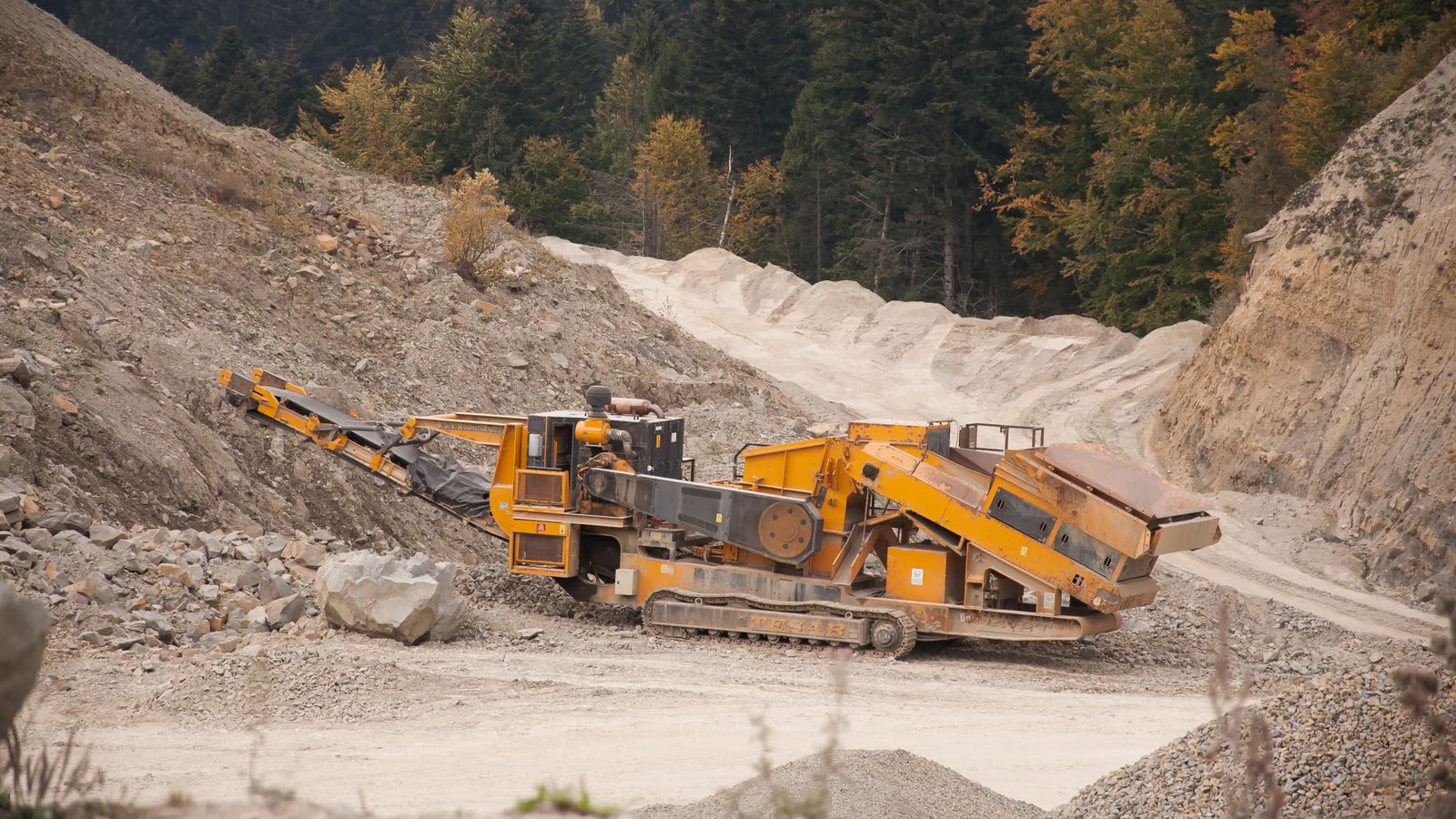
Polyurethane wear parts are moulded components that protect mining equipment from abrasive wear. Their exceptional resistance to friction, impact and tearing helps them last several times longer than rubber or steel, reducing production shutdowns and replacement costs.
In a mine or quarry, every tonne of material moving through the process attacks the equipment. Polyurethane wear parts provide a practical response to this daily fight against abrasion where steel develops grooves and rubber tears too quickly.
This article explains why the material performs so well at the most demanding locations, which parts benefit most from conversion and how to choose the right grade for maximum service life.
Why abrasive wear erodes mining profitability
Abrasion is the main enemy of mineral-processing equipment. Every contact point between material and machinery - from chutes to screens - erodes a little more during every shift. This quiet wear eventually causes unplanned shutdowns, precisely the outcome every operation works to prevent.
When a part fails, replacing it is only one cost. There is also conveyor or crusher downtime, maintenance labour, the risk of contaminating adjacent components and production lost during the repair. The actual cost of a wear part therefore extends far beyond its purchase price.
This is where material selection becomes strategic. A component that withstands abrasion longer spaces out interventions, stabilizes production and protects neighbouring parts. Mining and aggregate applications illustrate this daily challenge.
Why polyurethane wear parts are so resistant
Polyurethane is an engineering elastomer that combines the flexibility of rubber with mechanical performance approaching some rigid plastics. This dual nature explains why polyurethane wear parts perform so well in abrasive environments.
Resistance to abrasion, impact and tearing
Under load, a good abrasion-resistant polyurethane deforms slightly, absorbs the impact of hard particles and then returns to its original shape. This elasticity dissipates the energy that would remove material from a steel surface. Published research on the abrasive wear resistance of polyurethane coatings confirms this behaviour with erosive minerals. A detailed comparison of polyurethane and rubber shows that polyurethane retains its surface integrity longer under repeated friction.
A Shore hardness suited to each location
Formulation is not the only factor; hardness also matters. Selecting the right Shore hardness adjusts part behaviour, making it softer for damping or harder for impact and abrasion resistance. This precision is a major advantage of custom moulding over standard off-the-shelf parts.
Crusher wear parts and critical areas to protect
A few locations in a crushing circuit account for most of the wear. Treating them first with properly designed crusher wear parts provides the best return.
Seals and dust rings
Crusher seals suffer first. Dust and fines penetrate and ruin sealing performance in only a few weeks. A polyurethane ring blocks debris more effectively and protects bearings, a common source of costly failures.
Chute liners and screening panels
Material continuously slides and strikes chute liners, transfer drops and screening panels. A polyurethane liner reduces sticking, improves material flow and wears more slowly than steel while also lowering operating noise.
Conveyor rollers and wheels
Polyurethane conveyor rollers withstand impact at transfer points and roll without marking the belt. Their low weight also makes handling and installation easier during maintenance shutdowns.

Unsure which grade or hardness to use at your most critical wear points? Have your current parts assessed by an engineering team specializing in polyurethane moulding before the next planned shutdown.
Polyurethane compared with rubber and steel
Industry relies on standardized tests such as the Taber abrasion test method to compare materials objectively. These protocols measure material loss under repeatable conditions and help identify the right grade for each location.
| Criterion | Polyurethane | Rubber | Steel |
|---|---|---|---|
| Abrasion resistance | Excellent | Moderate | Variable |
| Impact absorption | Very good | Good | Low |
| Operating noise | Low | Low | High |
| Part weight | Light | Light | Heavy |
| Ease of installation | High | Moderate | Low |
This table is qualitative; the exact ranking depends on the grade, hardness and material being processed. It nevertheless shows why elastomer often has the advantage at most abrasive locations.
How to extend wear-part service life
A few practices make the difference between a dependable polyurethane wear part and a disappointing one.
- Map the locations most heavily attacked by abrasion before ordering.
- Match the hardness and chemistry: polyester for dry fines and polyether for wet or chemical environments.
- Verify the quality of metal-to-polyurethane bonding on coated parts to prevent separation under load.
- Schedule replacements during planned shutdowns rather than waiting for a failure.
- Document the actual life of each part to improve future orders.
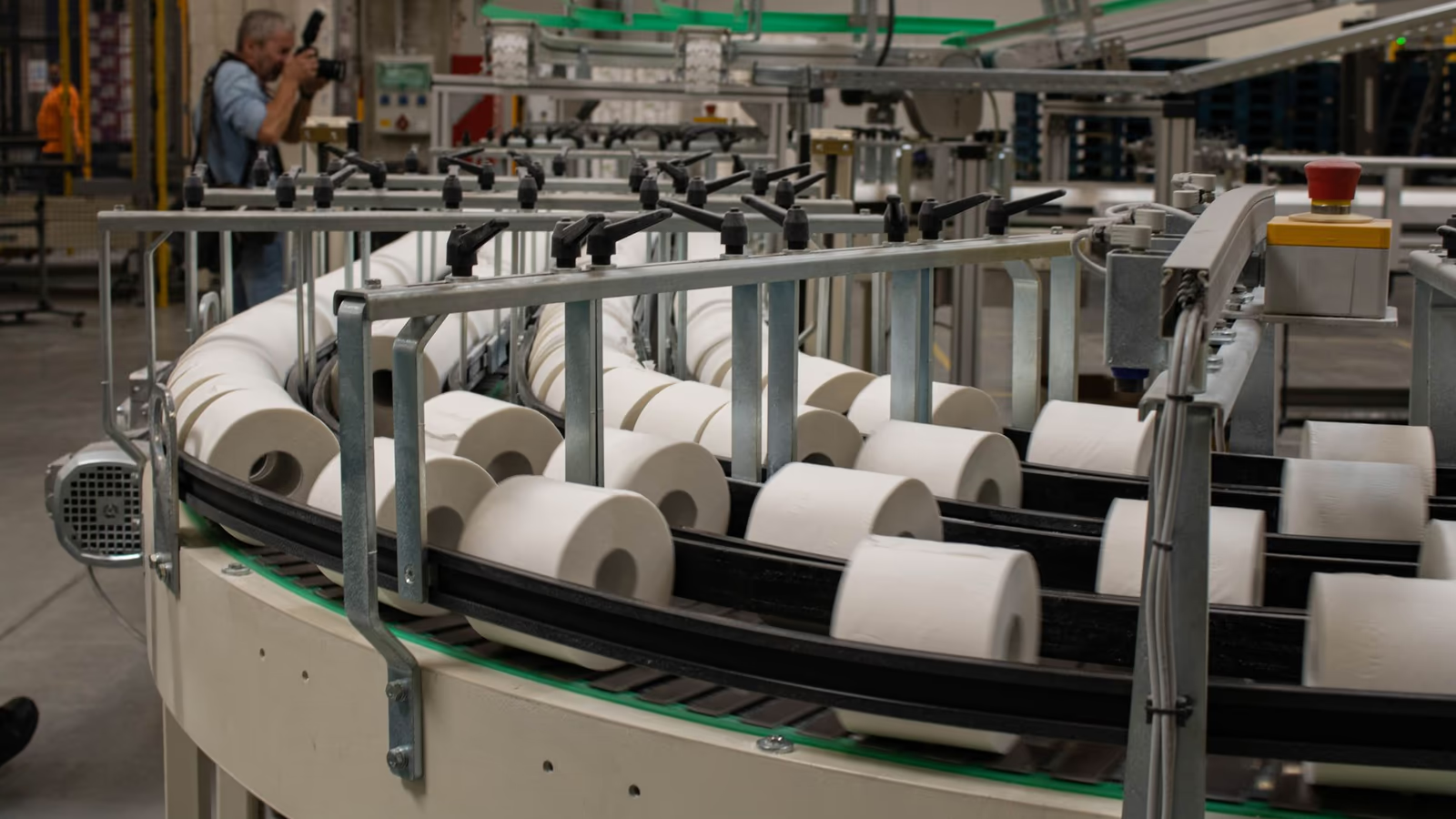
Together, these practices turn a simple material substitution into a true reliability program, one wear point at a time.
Conclusion
Reducing abrasive wear is not optional in mining; it is a condition of profitability. Polyurethane wear parts provide a practical way to extend intervals between shutdowns, reduce unexpected failures and improve crushing and conveying equipment performance. The right grade, hardness and design can turn a recurring cost into a lasting advantage. To assess critical wear points and determine suitable grades, speak with a polyurethane engineering team before your next planned shutdown.
FAQ
What do polyurethane wear parts change for a mining operation?
Polyurethane wear parts replace steel or rubber components at the locations most heavily attacked by abrasion. They absorb impact better, move more easily under load and resist friction from hard particles. As a result, replacement intervals grow longer, unexpected shutdowns decrease and processing equipment maintains stable performance, even with highly abrasive fine materials found in Quebec quarries.
Does polyurethane resist abrasion better than rubber?
In most standardized friction tests, abrasion-resistant polyurethane outperforms rubber, especially against hard particles that slide and scrape across surfaces. It retains its integrity longer and is less prone to tearing. Rubber has advantages for pure damping, but polyurethane generally provides substantially longer life at wear points exposed to abrasive material.
Which crusher wear parts benefit most from polyurethane?
Crusher seals and dust rings are high-priority components because dust and fines quickly damage steel or rubber alternatives. Chute liners, screening panels and impact bumpers follow. These crusher wear parts experience constant friction, and a properly selected grade significantly extends maintenance intervals while reducing bearing contamination by debris.
How do you choose the right hardness for a polyurethane part?
The choice depends on the stress. Harder grades around 90 to 95 Shore A perform better in chutes and surfaces exposed to heavy impact. A softer grade is more appropriate for damping shock or conforming to a shape. Chemistry also matters: polyester polyurethane resists dry fines well, while polyether performs better in wet and chemical environments.