
Polyurethane screens for abrasive mining applications
Polyurethane screens are cast screening components that replace steel and rubber media on vibrating mining screens. They last significantly longer in abrasive service, resist blinding, reduce noise and lower cost per tonne through their flexibility and slow wear.
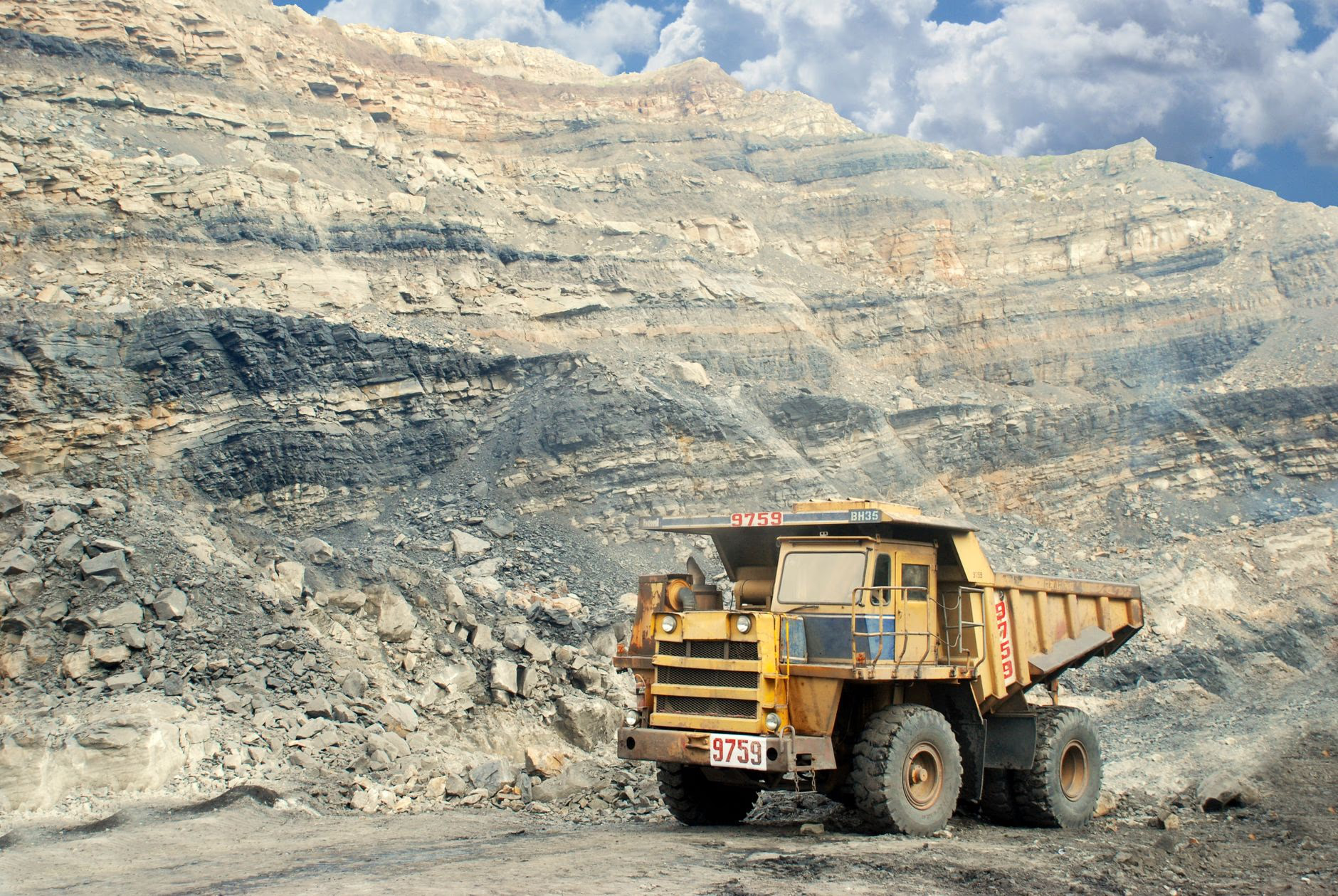
Polyurethane screens are cast screening components that replace steel and rubber media on vibrating mining screens. They last significantly longer in abrasive service, resist blinding, reduce noise and lower cost per tonne through their flexibility and slow wear.
In a mine or quarry, every hour of screening downtime means tonnes of lost production. When a screen deck wears too quickly, blinds or tears, the entire circuit slows down. That is why many operations replace metal media with polyurethane screens that are more durable and better suited to abrasive mining conditions.
The right screening media directly affects throughput, separation accuracy and maintenance cost. This guide compares polyurethane with steel and rubber, details its advantages in abrasive environments and explains how to choose the right component for your vibrating screen.
What is a polyurethane screening panel?
A polyurethane screening panel is cast from a high-performance elastomer, moulded with calibrated apertures and mounted on the deck of a vibrating screen. The material combines rubber-like elasticity with superior abrasion resistance, explaining its broad range of industrial uses.
Square, slotted and tapered aperture patterns are moulded to match the target particle size. Panels are available as interchangeable modules or side-tensioned screens, allowing crews to replace one worn section instead of the entire deck.
To understand how the material behaves, review the properties of industrial polyurethane and the range of liners and screening panels available for crushers, chutes and hoppers.
Why polyurethane screens outperform steel and rubber
Screening-media selection involves a familiar industry trade-off: open area versus service life. Woven wire maximizes open area but wears quickly; polymer media gives up some throughput to last much longer.
Steel has a lower purchase price and high throughput, but its low elasticity makes it fail quickly under impact and abrasion. Rubber resists wear better than steel, yet generally does not match cast polyurethane in highly abrasive service.
| Criterion | Steel (woven wire) | Rubber | Polyurethane screens |
|---|---|---|---|
| Open area | High | Medium | Medium to high |
| Abrasion life | Low | Good | Excellent |
| Blinding resistance | Low | Good | Excellent |
| Noise level | High | Reduced | Reduced |
| Weight and handling | Heavy | Moderate | Light |
| Cost per tonne | High | Moderate | Low |
For a closer look at replacement decisions, our guide to when to replace steel parts provides practical benchmarks based on observed wear.
Key benefits for mining screens
The benefits of polyurethane accumulate throughout the life of the media, not just at purchase. On a screen processing hard, wet ore, these gains change the economics of an entire deck.
- Longer service life: cast polyurethane lasts much longer than steel or standard rubber in abrasive service, greatly extending change intervals.
- Less pegging and blinding: the material’s elasticity lets apertures flex and vibrate, releasing near-size particles and sticky material.
- Lower noise: polyurethane cushions metal-on-metal impacts, an advantage on sites subject to decibel limits.
- Safer handling: a modular panel is lighter than steel, installs faster and reduces handling risks during replacement.
Field data support these benefits. At one mine that replaced woven wire with tensioned polymer screens, a supplier reported a 10 to 25% increase in throughput and up to 400% longer service life, along with lower noise and maintenance costs.
Not sure which screening media suits your vibrating screen? Have the configuration reviewed by an engineering team that makes custom components and obtain a recommendation tailored to your ore and throughput.
How to choose polyurethane screening media
The right choice depends on the ore, the position on the deck and the polyurethane formulation. A single operation often combines several hardnesses on one screen to optimize each zone.
Match hardness to the ore and deck position
At the feed end, material arrives in a thick bed and impact is severe, so a softer material absorbs energy more effectively. Toward the discharge end, a harder formulation maintains precise apertures for accurate sizing. Understanding polyurethane Shore hardness helps identify the right range, generally from 50A to 70D depending on the application.
Practical selection criteria
- Particle size and aperture shape: square, slotted or anti-pegging tapered openings based on the target cut.
- Ore abrasiveness and moisture: polyurethane gains value as the material becomes more aggressive or sticky.
- Mounting system: interchangeable modular panels or tensioned screens to suit the existing machine.
- Custom fit: reproducing a panel for a specific screen brand avoids modifying the equipment.

Cost per tonne and return on investment
The best measure is not purchase price but cost per tonne processed. Metal mesh costs less initially but wears quickly. A polyurethane component costs more per unit, lasts much longer and reduces downtime, labour and rejected material.
A common industry rule is that polymer conversion becomes economical once a metal screen must be replaced more than five times per year because of wear. Polyurethane screening components follow the same logic as other mining wear parts, where longevity matters more than initial price.
By combining long service life, less blinding and lower noise, polyurethane screens deliver a rapid return on high-tonnage abrasive circuits.
Conclusion
Polyurethane screens are among the most cost-effective options for abrasive mining screening. They outlast steel and rubber, limit blinding, reduce noise and lower cost per tonne while fitting readily onto existing screens. To reduce production downtime, have your screening configuration evaluated by cast-polyurethane specialists and request a proposal tailored to your decks and ore.
FAQ
What are polyurethane screens used for in mining?
Polyurethane screens are panels moulded from a highly durable elastomer and mounted on vibrating screens in mines and quarries. They separate ore by size while resisting abrasion, impact and blinding. Their flexibility extends media life and reduces noise and maintenance cost compared with steel or rubber.
Do polyurethane screens really last longer than steel?
Yes. Cast polyurethane resists wear much better than steel or standard rubber in abrasive service, greatly extending replacement intervals. One manufacturer reports that changing from woven wire to polyurethane panels increased service life by as much as four times. Fewer changes mean less production downtime and more maintenance capacity for other critical work.
Does polyurethane really reduce pegging and blinding?
Polyurethane is a flexible elastomer that vibrates and flexes under the screen load. That movement helps eject near-size particles and wet or sticky material that blocks rigid metal screens. Apertures can also be moulded with a taper so material passes without becoming trapped, maintaining stable screening capacity.
How do you choose the right Shore hardness for a panel?
Shore hardness is selected based on particle size, ore abrasiveness and the panel’s position on the deck. At the feed end, where impact is severe, a softer material absorbs energy more effectively. Toward the discharge, a harder formulation maintains clean apertures for accurate sizing. The supplier should adjust hardness to actual operating conditions.
Are polyurethane screening components cost-effective?
Yes, provided cost is measured per tonne instead of by purchase price. Metal media cost less initially but wear quickly in abrasive service. A polyurethane component costs more per unit, lasts much longer and reduces downtime, labour and rejects. Polymer media become especially attractive when metal screens need replacement several times each year.