
Polyurethane screening panels and media vs. steel
Polyurethane screening panels outperform steel in abrasive environments: they last longer, weigh less, reduce noise and resist blinding. Their higher purchase price pays off through a lower cost per tonne and less vibrating-screen downtime.
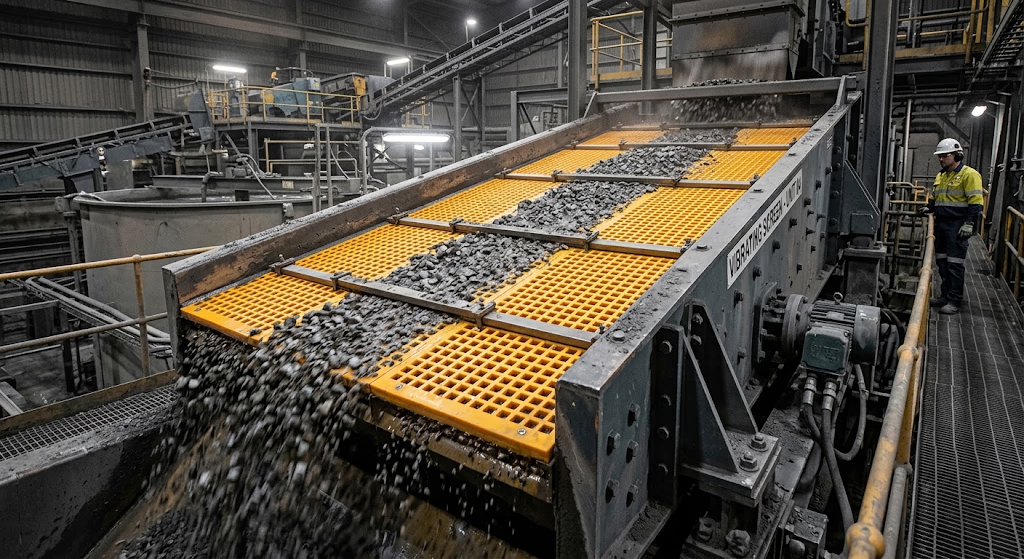
Polyurethane screening panels outperform steel in abrasive environments: they last longer, weigh less, reduce noise and resist blinding. Their higher purchase price pays off through a lower cost per tonne and less vibrating-screen downtime.
Every tonne that crosses a vibrating screen wears the screen media, and every replacement cuts into production. Polyurethane screening panels change the equation in Canadian mines, quarries and aggregate plants, especially where steel bends, clogs and creates difficult handling work for maintenance crews.
This is not a theoretical debate. In the field, the choice of screen media determines cost per tonne, unplanned downtime and even noise compliance. This guide compares polyurethane and steel against the criteria that matter most, then explains how to choose the right hardness and mounting system.
Why choose polyurethane screening panels and media
Polyurethane is a cast elastomer that deforms under impact and then returns to its original shape. Unlike steel, which can dent or crack, this elasticity absorbs the impact of rock and extends the media's service life. This combination of flexibility and wear resistance accounts for its practical advantages in screening applications.
The main benefits of a polyurethane screen deck are clear:
- Longer service life with abrasive and wet materials
- Lower weight for easier installation and handling
- Less blinding thanks to a smooth, slightly flexible surface
- Lower operating noise because the elastomer dampens impacts
- Corrosion resistance when handling acidic or saline ores
To better understand how the material behaves, review the properties of industrial polyurethane before comparing it with steel point by point.
How polyurethane outperforms steel in screening
Steel retains some advantages, particularly high open area and a lower purchase price. Once abrasion, moisture or noise enters the equation, however, the balance shifts toward elastomeric media. The following table summarizes the differences that affect operating performance.
| Criterion | Polyurethane | Steel |
|---|---|---|
| Service life in abrasive conditions | Very high | Low to moderate |
| Weight and handling | Lightweight and easy to install | Heavy |
| Blinding | Low, with a self-cleaning effect | High with sticky materials |
| Operating noise | Dampened | High, with metal-on-metal contact |
| Corrosion | Excellent resistance | Vulnerable with acidic ores |
| Purchase price | Higher | Lower |
| Cost per tonne processed | Lower over its service life | Higher over the long term |

This comparison explains why so many operations are revising their strategy and asking when to replace their wear parts rather than repeatedly installing new steel mesh.
Service life and cost per tonne in the field
Service life is the most decisive argument. According to screening-media manufacturers, a properly selected panel can last three to five times longer than steel in highly abrasive conditions. Actual gains depend on the ore, moisture level and selected hardness.
That longevity translates directly into savings. Fewer replacements mean fewer planned shutdowns, less maintenance labour and more stable production. The right measure is therefore not the price shown on the panel, but the cost per tonne processed over its full service life.
Blinding also has a major economic effect. When fine, wet or sticky material clogs steel openings, screening efficiency falls. Polyurethane's flexibility generates secondary vibration that helps eject particles and keep the apertures clear, preserving throughput.
Not sure whether to replace your steel media or switch to polyurethane? Have an engineering team assess a worn sample and your required apertures before the next planned shutdown.
Less noise and a safer workplace
Noise is more than a comfort issue. In Québec, the occupational noise exposure limit has been 85 dBA since 2023, and hearing disorders account for the majority of recognized occupational diseases. Reducing noise at the source is therefore a practical obligation for operators.
This is precisely where elastomeric media helps. By dampening metal-on-metal impacts, it reduces sound levels around vibrating screens. That reduction supports regulatory compliance and protects crews against occupational hearing loss without relying solely on hearing protection.
Exposure limits vary by jurisdiction. Consult the occupational noise exposure limits across Canada to understand the requirements that apply to your operation. Quieter screen media is part of a source-control strategy that is more durable than personal protective equipment alone.
Choosing the right Shore hardness and mounting system
A high-performing panel is one matched to its position on the deck. In feed zones, softer polyurethane absorbs the energy of large material. Near the discharge end, a harder material maintains aperture accuracy and particle classification. For more detail, see this guide to understanding polyurethane Shore hardness.
Confirm these points before ordering:
- Shore hardness based on deck position and ore type
- Aperture dimensions and the required screening pattern
- Mounting method: bolted, clipped or snap-in
- Process temperature and moisture conditions
- Compatibility with the existing screen structure
Testing a worn sample remains the best way to determine the right balance. It prevents specifying a rigid formulation where flexibility would provide better protection, or the reverse. This level of customization is what distinguishes purpose-built media from a generic product.
Mining and industrial applications in Canada
Polyurethane screening panels are used wherever abrasion and impact are severe. They are installed on vibrating screens, in feed chutes, as hopper liners, at transfer points and on dewatering screens. Mines and aggregate quarries are among the most common users.
Canadian operations add their own requirements: freeze-thaw cycles, varied ores and strict safety standards. Polyurethane media for abrasive mining screens performs well in these conditions because it tolerates temperature changes and resists corrosive materials.
Beyond screening, the same principles apply to wear surfaces exposed to similar stresses. Custom liners and screening products make it possible to adapt apertures, hardness and mounting to each machine rather than impose one solution across an entire plant.
Conclusion
The choice between steel and polyurethane is not decided by purchase price, but by total cost. Polyurethane screening panels deliver longer service life, less blinding, lower noise and a lower cost per tonne in abrasive environments. Steel still has a place, but seldom where wear and moisture dominate.
To reduce downtime and protect production, request a technical recommendation based on your actual screening conditions, ore and aperture requirements. Properly specified media pays for itself one shutdown at a time.
FAQ
Are polyurethane screening panels suitable for every material?
Yes, in most cases. Polyurethane screening panels adapt well to wet, sticky or fine screening applications where steel quickly blinds. For very coarse material or extreme impact, use greater hardness near discharge points and more flexibility in feed zones. An assessment of your real operating conditions confirms the best formulation and apertures for the application.
Does polyurethane cost more than steel?
At purchase, yes: a polyurethane panel often has a higher unit price than steel. Over its service life, the calculation reverses. Longer life, fewer replacements and less downtime reduce the cost per tonne processed. In highly abrasive environments, the return on investment can be measured in months. Total cost of ownership, rather than the quoted unit price, is the right measure.
How do I choose the right Shore hardness for my screens?
Shore hardness is selected according to the panel's position on the deck and the type of ore. In feed zones, softer polyurethane absorbs the impact of large material. Near discharge zones, a harder material maintains aperture accuracy and particle classification. Common grades range from 50A to 70D. Testing a worn sample helps establish the best balance between flexibility and wear resistance.
Does polyurethane really reduce workplace noise?
Yes. Polyurethane dampens the metal-on-metal impacts that make steel screens so loud. This reduction helps plants meet noise exposure limits, an important occupational health issue across Canada. Beyond comfort, lower noise means less risk of hearing loss and better communication on the plant floor. Combined with hearing protection, elastomeric media becomes an effective source-control measure.