
Polyurethane rollers: recondition instead of replace
Recovering a polyurethane roller means removing the worn layer, inspecting the metal core and casting a new formulation onto the same shaft. It generally costs less than a new replacement, shortens lead times and extends the working life of industrial conveyors.
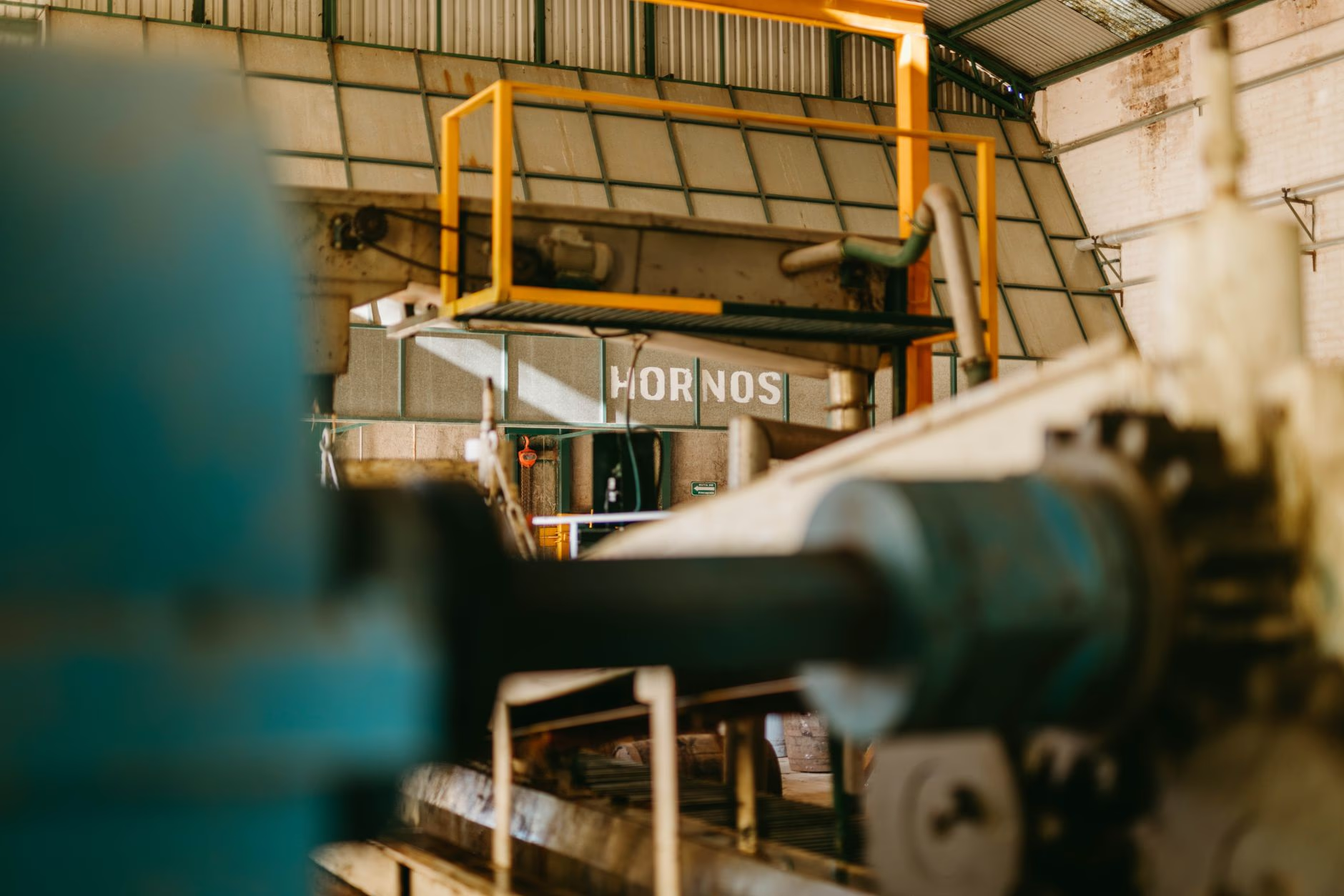
Recovering a polyurethane roller means removing the worn layer, inspecting the metal core and casting a new formulation onto the same shaft. It generally costs less than a new replacement, shortens lead times and extends the working life of industrial conveyors.
Every minute of conveyor downtime is expensive. Yet when a roller shows wear, the first reaction is often to order a new part. That is not always the smartest or most economical choice. Recovering gives sound components a second life while adapting their performance to actual operating conditions.
What is polyurethane roller recovering?
Recovering, or reconditioning, replaces only the wear layer of a roller instead of discarding the shaft. The principle is straightforward: the surface exposed to friction, impact and abrasion wears, while the steel or aluminum core often remains sound for years.
A specialized shop removes the old material, cleans and inspects the core, corrects defects and casts a new polyurethane covering. The roller is then machined and ground to its original dimensions. This industrial roller repair and recovering process restores performance comparable to a new roller and sometimes improves it with a newer formulation.
The service applies to carrying, drive and guide rollers, including conveyor rollers and wheels exposed to heavy loads or abrasive materials.
Solid polyurethane or polyurethane-covered
Two configurations are common. A solid roller is cast in polyurethane around the shaft and suits lighter loads and smaller diameters. A covered roller uses polyurethane bonded to a metal core, providing much greater load capacity and diameter.
The second type is the best candidate for recovering because high-quality metal-to-polyurethane bonding allows the wear layer to be rebuilt without compromising adhesion to the core.
Recondition or replace industrial rollers?
The right decision depends on core condition. If the core is straight and has no deep corrosion or cracks, recovering is almost always the more economical option. If the shaft is bent, severely corroded or damaged at the bearing seats, replacement may be necessary. Our guide to when to replace industrial parts examines these criteria in detail.
| Criterion | Recovering (reconditioning) | New replacement |
|---|---|---|
| Cost | Lower; pay for the wear layer and machining | Higher; pay for the complete component |
| Lead time | Often shorter in the shop | Depends on manufacturing and supply |
| Metal core | Reused when sound | Replaced even if it was still usable |
| Environmental impact | Less metal waste | Greater material consumption |
| Performance | Restored and adjustable to the application | New, to the original specification |
In practice, most rollers arriving at a repair shop have a fully reusable core. Automatic replacement means paying for a new shaft that was not needed.

Benefits of polyurethane recovering
Polyurethane is known for its strength in industrial environments. The advantages of urethane rollers include excellent wear resistance, load capacity and a low tendency to mark conveyed products.
- Direct savings: you pay for the new covering and machining, not the shaft.
- Shorter lead times: reusing the core avoids waiting for full fabrication.
- Longer life: polyurethane’s abrasion resistance extends future maintenance intervals.
- Less noise and vibration: the elastomer layer cushions impact better than steel.
- Better belt tracking: a correctly ground profile improves conveyor alignment.
Formulation matters as much as the base material. A softer covering cushions impact, while a firmer covering maximizes abrasion resistance and dimensional stability under load. This is where an experienced manufacturer makes a measurable difference.
Before ordering a new component, have worn rollers inspected. A simple core examination can prevent an unnecessary expense and a long procurement delay.
How roller recovering works
- Receipt and diagnosis: measure wear, check runout and inspect the core.
- Stripping: remove the old covering completely down to bare metal.
- Core preparation: clean the core, repair bearing surfaces and apply the bonding treatment.
- Casting: apply the new polyurethane formulation to the core.
- Machining and grinding: restore the original dimensions and smooth, grooved or crowned profile.
- Quality control: verify hardness, diameter and concentricity.
This discipline explains why a properly recovered roller is difficult to distinguish from a new component while retaining a proven core.
Hardness is a key parameter
The new covering can span a broad hardness range, generally 60A to 95A, in line with industrial roller specifications. Our polyurethane Shore hardness guide explains how each value affects performance. The lower the value, the softer and more cushioning the cover; the higher the value, the better it resists abrasion and holds its shape.

Choosing the right manufacturer for covered rollers
Recovering quality depends directly on process control. A strong partner designs moulds in-house, controls adhesion to the core and adapts the formulation to the application instead of imposing one standard recipe.
Look for a team that can recommend the right hardness, profile and thickness for your loads, speeds and environment, including temperature, moisture and abrasive products. Local expertise also shortens lead times and simplifies technical follow-up. Properly specified covered polyurethane rollers outperform automatic replacement year after year.
Conclusion
Reconditioning polyurethane rollers instead of replacing them is the more economical and sustainable decision in most high-wear applications. You reuse a sound core, reduce cost and lead time, and extend conveyor availability. Have worn parts evaluated by a qualified technical team before paying for new components; a quick inspection often reveals a solution that is both more affordable and equally effective.
FAQ
Why recover polyurethane rollers instead of replacing them?
Recovering polyurethane rollers reuses the existing metal core, which remains fully sound in most cases. You pay only for the new wear layer and machining rather than the entire shaft. The result costs less than a new part, returns to service faster and reduces metal waste. It restores original performance while adapting the roller to current operating conditions.
How many times can an industrial roller be reconditioned?
A well-designed roller can be recovered several times as long as its steel or aluminum core remains straight and free of deep corrosion or cracks. Each cycle removes the old covering, checks critical dimensions and applies a new formulation. The practical limit depends on shaft condition, bearings and required precision. A shop inspection determines whether another recovering cycle is justified.
Which Shore hardness should I choose for a recovered roller?
Ideal hardness depends on load, speed and contact type. Softer covers around 60A cushion impact and protect delicate products. Firmer covers near 95A resist abrasion better and retain their shape under high loads. An experienced manufacturer recommends the exact formulation for the application instead of applying one hardness to every roller.
Is polyurethane recovering more economical over the long term?
Yes, in most high-wear applications. Recovering costs less initially than a new component, and polyurethane’s longer life extends future maintenance intervals. Planned service also reduces unplanned production stoppages. Over several years, shorter lead times, fewer replacements and higher equipment availability provide a stronger return than automatic replacement.