
Polyurethane manufacturer in Canada: choosing a local partner
Choosing a local polyurethane manufacturer in Canada means custom parts that are designed, cast and machined on site, with shorter lead times, rigorous quality control and technical support close at hand. A local partner reduces import risk and extends the service life of your equipment.
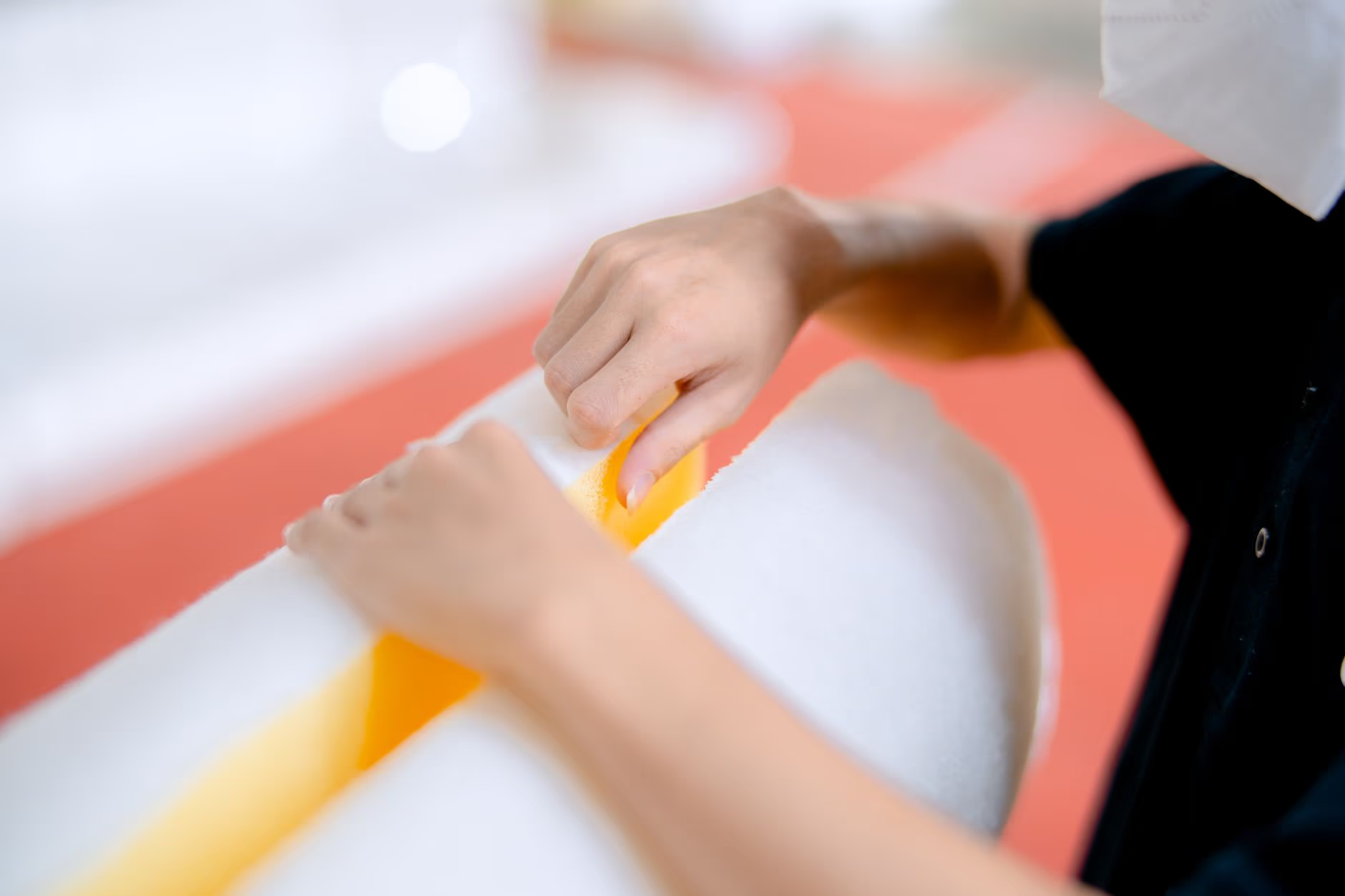
Choosing a local polyurethane manufacturer in Canada means custom parts that are designed, cast and machined on site, with shorter lead times, rigorous quality control and technical support close at hand. A local partner reduces import risk and extends the service life of your equipment.
Finding a polyurethane manufacturer in Canada that can keep up with your production pace is not only a question of price. When a wear part fails on a conveyor or a press, every hour of downtime is expensive, and a supplier on the other side of the world cannot react fast enough.
Proximity changes everything. A local partner understands your sector, adjusts formulations to your application and delivers faster. This article compares the practical advantages of a Canadian partner and helps you make an informed choice, part by part.
Why choose a polyurethane manufacturer in Canada
The answer comes down to three words: proximity, control and speed. A domestic manufacturer designs the part, casts the material and assembles it under one roof, without subcontracting critical steps overseas.
This vertical integration translates into tighter tolerances and consistent performance from one batch to the next. You speak directly with the people who make your part, in English or French, which speeds up every technical decision.
By contrast, a supply chain stretched across several continents multiplies the points of failure: customs, ocean freight, time zones and misunderstood specifications. To frame your search properly, these supplier selection criteria are worth reviewing before any purchase.
The practical advantages of a local polyurethane supplier
A local polyurethane supplier does more than sell a material. It acts as an extension of your engineering team, able to recommend the right hardness, geometry and molding process for your load and environment.
The benefits show up every day:
- Shorter lead times: no ocean crossing or customs wait, which limits production stoppages.
- Real customization: parts molded to your drawings, from prototype to production run.
- Direct quality control: on-site inspection and traceable formulations.
- After-sales support: a reachable contact to fine-tune a part as your process evolves.
- Smaller logistics footprint: less shipping, less packaging, fewer surprises.
These advantages of a Quebec-based manufacturer become decisive in demanding sectors such as mining, material handling, forestry and snow removal, where a single failed part can shut down an entire line.

How a Canadian polyurethane partner protects your lead times
A Canadian polyurethane partner shortens the loop between the need and the delivered part. When a roller wears out or a bumper cracks, geographic proximity makes it possible to restart production in days rather than weeks.
This responsiveness relies on three complementary molding processes: open casting, compression and injection. Depending on the quantity and precision required, the manufacturer picks the fastest and most economical method for your order.
As a result, your safety stock can shrink because replenishment becomes predictable again. It is a concrete way to reduce the hidden costs tied to polyurethane roller sleeves and other critical wear parts on your equipment.
Not sure which hardness and part type best suit your equipment? Discuss your application with a nearby technical team before launching your next project.
Custom polyurethane: what a Quebec manufacturer can offer
Cast polyurethane stands out because it can be formulated part by part. The material covers a Shore hardness range from roughly 60A to 75D, spanning soft, cushioning parts through to rigid load-bearing components.
This formulation flexibility explains why the material often outlasts rubber and steel. Cast polyurethane performs remarkably well against sliding and impact abrasion, a major asset in dusty or wet environments.
This performance is verified in the lab with the ASTM D4060 Taber test method, which measures material loss under controlled friction. It makes an objective comparison between two materials possible before deciding, as this comparison with rubber shows.
Parts designed for your application
Cast tubes, compression springs, bars, bumpers, wheels and liners: the range covers material handling as well as heavy equipment. Custom molded parts are an effective replacement for components that deform or rust too quickly.
Replacing steel and rubber at the right time
Knowing when to switch to polyurethane avoids paying twice. This guide on when to replace steel parts helps you target the most cost-effective wear points first.
Local manufacturer vs. imported supplier
The table below summarizes the differences most commonly observed between a domestic manufacturer and a distant source.
| Criterion | Local manufacturer | Imported supplier |
|---|---|---|
| Lead times | Short and predictable | Long, subject to customs |
| Customization | High, from prototype to production | Often limited to catalogues |
| Quality control | Direct, on site | Indirect, remote |
| Technical support | Reachable contact | Time zone and language gaps |
| Logistics | Smaller footprint | Long transit and heavy packaging |
This kind of comparison is a reminder that an attractive unit price sometimes hides downtime, shipping and quality costs that weigh heavily over a full year.
How to choose the right partner
A sound choice rests on verifiable criteria rather than promises. Before signing, check these points:
- Years in business and the industries actually served.
- Command of molding processes and machining capacity.
- The hardness range offered and documentation of formulations.
- Membership in recognized professional associations.
- The quality and availability of technical support.
A partner that offers a tailored solution rather than an off-the-shelf product lowers your long-term risk and secures your production.
Conclusion
Choosing a polyurethane manufacturer in Canada means betting on proximity, quality control and speed to extend the service life of your equipment. A local polyurethane supplier turns an ordinary wear part into a competitive advantage, provided you choose a partner that understands your process.
To go further, request a technical assessment of your most critical wear parts and compare material and hardness options with a specialist close to you, before your next planned shutdown.
FAQ
What does a polyurethane manufacturer in Canada offer that an importer does not?
A polyurethane manufacturer in Canada designs, formulates and produces parts on site, which gives it direct control over quality and tolerances. You benefit from shorter lead times, technical discussions in English or French and quick formulation adjustments for your application. This proximity reduces shipping costs, customs delays and the supply disruption risks that come with imported parts.
Does custom polyurethane cost more than standard parts?
The upfront price of a custom part may seem higher than a catalogue item, but the comparison must account for service life. A part molded for your load, hardness and environment wears more slowly and reduces production stoppages. Over several replacement cycles, the total cost of ownership often comes out ahead, especially in abrasive applications or those subject to repeated impact.
What polyurethane products can a local supplier make?
A local polyurethane supplier produces a wide range of industrial components: molded tubes, compression springs, bars and profiles, bumpers, roller sleeves, wheels and liners. Each part can be adjusted for hardness, color and dimensions to suit the application. Open casting, compression and injection molding support both prototyping and production runs for material handling, mining, forestry and custom equipment.
How do you assess a Canadian polyurethane partner’s expertise?
Start with years in business and the industries served, because an experienced Canadian polyurethane partner knows the real constraints of the field. Check its command of molding processes, machining capacity, the hardness range offered and membership in recognized professional associations. Ask for examples of applications similar to yours and evaluate the quality of technical support. A good partner documents its formulations and offers solutions rather than products.