
Polyurethane liners for hoppers and chutes
Polyurethane liners protect hoppers and chutes from abrasion, impact and material buildup. More durable than steel and more wear-resistant than rubber, they extend equipment life, reduce noise and simplify handling while conforming to each geometry.
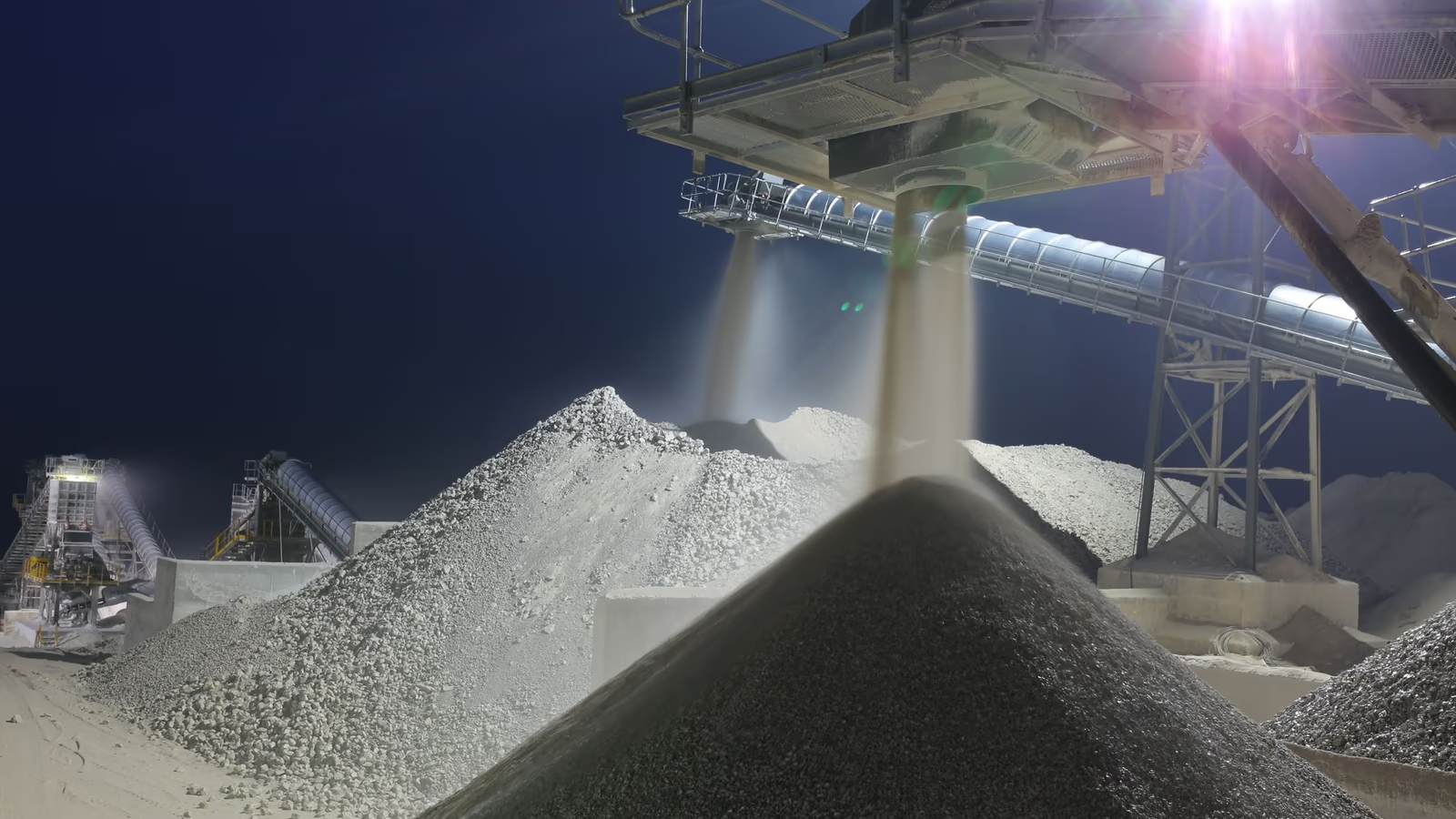
Polyurethane liners protect hoppers and chutes from abrasion, impact and material buildup. More durable than steel and more wear-resistant than rubber, they extend equipment life, reduce noise and simplify handling while conforming to each geometry.
Polyurethane liners are changing how mining, aggregate and recycling plants protect material-handling equipment. Where steel develops grooves and rubber tears, these resilient liners withstand abrasion and material impact without corrosion or excessive noise.
A perforated hopper or worn chute means material loss, a stopped line and an expensive repair. Installing the right liner in the right place prevents these losses. This guide compares polyurethane with steel and rubber, then explains how to select, fasten and get the most from wear plates.
Why wear attacks hoppers and chutes first
Inside a hopper or chute, material continuously slides, rebounds and rubs against the walls. This motion combines three wear mechanisms: sliding abrasion, impact from falling lumps and often corrosion caused by moisture and fine material.
Bare steel performs poorly against this combination. It develops grooves, corrodes and eventually wears through. Rubber absorbs impact better but tears under severe abrasion. Understanding the dominant failure mode is the key to choosing a durable liner, as technical reviews of bulk material handling equipment wear consistently emphasize.
A poorly protected transfer point deteriorates quickly: every tonne that passes removes a little more metal. A sound strategy first identifies the most heavily loaded impact and sliding zones, then installs a material designed for that type of wear.
Polyurethane liners as an alternative to steel and rubber
Cast polyurethane sits between the two materials. It provides the abrasion resistance of an engineering plastic and the elasticity of rubber without the weight or corrosion of steel. This combination makes it a leading choice for lining transfer points.
Compared with steel
Against abrasion-resistant steel, polyurethane has three advantages: it weighs a fraction as much, it does not rust and its resilient surface absorbs impact instead of permanently deforming. Tests show that polyurethane abrasion resistance can equal or exceed that of some tool steels.
The practical result is lighter liners that maintenance teams can handle more easily and that often last several times longer between replacements.
Compared with rubber
Rubber remains useful for pure damping but fails more quickly under sliding abrasion. Polyurethane retains its shape under sustained load, better resists oils and hydrocarbons and is less prone to tearing. A detailed comparison of polyurethane and rubber helps identify the better choice for the actual wear mechanism.
| Criterion | Steel | Rubber | Polyurethane |
|---|---|---|---|
| Sliding abrasion | Moderate | Low to moderate | High |
| Impact absorption | Low | High | High |
| Weight | High | Low | Low |
| Corrosion | Susceptible | Unaffected | Unaffected |
| Noise level | High | Low | Low |
| Fine-material buildup | High | Moderate | Low |

Benefits of polyurethane wear liners
Polyurethane wear liners offer benefits that matter in operation. They do more than last longer; they change how the entire transfer point behaves.
- Longer service life under repeated abrasion and impact
- Significant reduction in noise and vibration transmitted to the structure
- Lower weight that simplifies installation and handling
- No corrosion, even with moisture and fine material present
- A non-stick surface that limits buildup and blockages
- Custom formulation with adjustable hardness, colour and geometry
These benefits translate directly into operating gains: fewer unexpected shutdowns, longer maintenance intervals and better protection for operators from noise. On a continuously operating line, every avoided replacement produces real savings in parts and downtime.
A transfer point that wears too quickly deserves a proper diagnosis. Before ordering another steel plate, have your application assessed by an engineering team to identify the right solution and hardness.
Selecting polyurethane liner plates
Not all polyurethane liner plates are equal. Three specifications determine final performance: hardness, fastening and geometry.
Shore hardness comes first
Hardness determines the balance between flexibility and abrasion resistance. Softer formulations absorb impact better, while harder grades resist friction more effectively. Depending on the application, liners can be cast from 50A to 70D; the Shore hardness guide helps place each range according to load, speed and particle size.
Fastening method
Bolts, clips, metal inserts embedded during casting or direct bonding can all be used. The fastening method depends on access and replacement frequency. Threaded inserts simplify installation on curved walls, while bonding provides continuous support without an exposed edge on flat surfaces.
Thickness and geometry
Thickness is calculated according to impact energy and material flow rate. Custom moulding can follow hopper corners, chute lips and screen panel opening patterns without leaving a weak area where wear can begin.

Typical hopper and chute applications
These liners are used wherever material strikes and slides along a wall:
- Crusher hopper walls and floors
- Transfer and drop chutes
- Transfer points between conveyors
- Screening panels and dewatering screens
- Impact zones beneath vibrating feeders
Each zone requires an appropriate formulation. A range of custom liners and screens covers these applications, from vibrating panels to hopper liners. When correctly specified, polyurethane liners turn a disposable wear part into a dependable, predictable component.
Conclusion
Polyurethane liners are a serious alternative to steel and rubber in hoppers and chutes. They extend service life, reduce noise and simplify handling when the right hardness and fastening method are selected. For a critical transfer point, validating the decision with specialists is better than replacing an existing plate with an identical one. Speak with an engineering team to define your requirements.
FAQ
Are polyurethane liners suitable for every hopper?
Polyurethane liners suit most hoppers and chutes exposed to abrasion, impact and material buildup. Custom moulding allows them to fit flat walls and complex shapes. For very high temperatures or certain aggressive solvents, a technical assessment is still required to select the formulation, hardness and fastening method best suited to the process.
Does polyurethane really last longer than steel?
In sliding and impact wear applications, polyurethane often outperforms chrome steel and abrasion-resistant plate. Its resilient surface absorbs material impact instead of permanently deforming and then returns to its original shape. The result is longer service life, fewer production shutdowns and wider maintenance intervals. Steel retains an advantage under extreme loads or temperatures the elastomer cannot tolerate.
How are polyurethane liner plates fastened to a chute?
Polyurethane liner plates can be fastened with bolts, clips, metal inserts embedded during casting or direct bonding to metal. The choice depends on access, replacement frequency and impact forces. Threaded inserts make installation easier on curved walls, while bonding suits flat surfaces. Careful steel preparation provides durable, safe adhesion.
Does polyurethane reduce noise at transfer points?
Yes. Polyurethane’s elasticity damps the impact of rocks and aggregates against walls, significantly reducing noise compared with bare steel. Lower noise improves operator comfort and supports compliance with workplace standards. The material also limits vibration transmitted to the structure, protecting assemblies and extending equipment service life.