
Polyurethane for forestry: durable custom components
Polyurethane for forestry covers custom molded parts (rollers, bumpers, sleeves, guides) that replace rubber, steel or UHMW-PE on harvesters and in sawmills. Its resistance to abrasion and impact extends component life and reduces equipment downtime in demanding forestry environments.
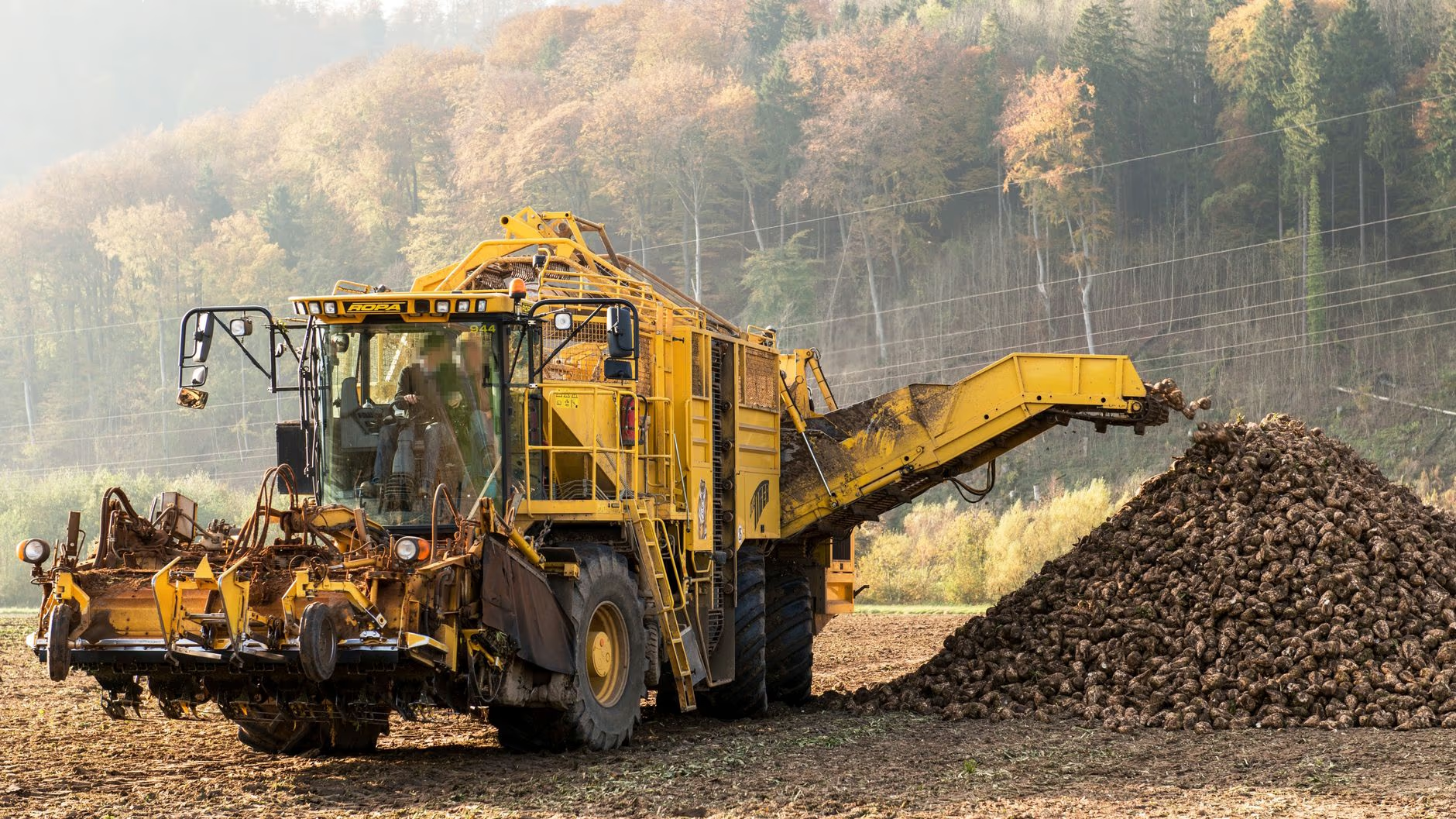
Polyurethane for forestry covers custom molded parts (rollers, bumpers, sleeves, guides) that replace rubber, steel or UHMW-PE on harvesters and in sawmills. Its resistance to abrasion and impact extends component life and reduces equipment downtime in demanding forestry environments.
In the forest, every hour of downtime is costly. A wear part that fails at the wrong moment strands a harvester miles from the nearest shop, and the OEM replacement is often slow to arrive. That is exactly where polyurethane for forestry makes a difference for operators and fleet managers.
This elastomer absorbs impact like rubber but resists abrasion almost as well as metal. The result: feed rollers, bumpers and liners that hold up season after season in dust, resin and cold.
Why choose polyurethane for forestry
Harvester heads, sawmill conveyors and wood handling systems operate in a demanding environment. Components face constant friction, repeated impact and chemical attack from resins and oils. Polyurethane addresses all three at once.
Resistance to abrasion, impact and resins
Abrasion is the leading cause of wear part failure in the forest. Polyurethane stands out here: under severe abrasion, it can outlast other materials by a factor of five to ten. It also absorbs impact without cracking and, unlike rubber, does not rot with prolonged exposure to moisture.
This combination explains why so many shops turn to a custom polyurethane manufacturer to rebuild the most heavily stressed parts of their forestry equipment.
Less downtime, more productivity
A part that lasts longer means fewer maintenance calls and fewer unplanned stoppages. On a harvester working far from everything, the difference shows up directly in harvested volume.
The practical advantages of polyurethane parts for forestry equipment:
- Longer service life against sliding and impact wear
- Good grip retained by rollers, even on wet bark
- Shock absorption that protects drive shafts and bearings
- Resistance to oils, greases and resins found in the forest
- Lower weight than steel, which makes handling easier
- Custom reproduction of OEM parts that are no longer available
Custom components for harvesters and sawmills
Needs vary from one machine to the next. That is why custom forestry components are designed part by part, according to the exact geometry, load and speed of the application.
Feed rollers and sleeves
The feed roller is the heart of a harvester head: it must grip the stem, delimb it and cut it to length consistently. Polyurethane roller sleeves restore grip and bite to worn rollers without replacing the entire metal structure.
Bumpers, guides and wear liners
Polyurethane bumpers, guides and liners protect contact points and absorb impact. On a sawmill conveyor, a well-formulated wear liner withstands the constant passage of logs without deforming.
The table below compares materials commonly used for wear parts in forestry.
| Criterion | Custom polyurethane | Rubber | Steel |
|---|---|---|---|
| Abrasion resistance | Very high | Medium | High |
| Impact absorption | Excellent | Good | Low |
| Resistance to resins and oils | High | Variable | High |
| Weight | Light | Light | Heavy |
| Protection of contact surfaces | Yes, non-marking | Sometimes marks | No |
| Customization | Complete | Limited | Machining required |
Need a hard-to-find part or a longer-lasting replacement for your harvesting equipment? Request a technical quote to validate the right formulation for your application.
Choosing the right hardness and formulation
A high-performing component is not just the right material: it needs the right hardness. A formulation that is too soft gets crushed, and one that is too hard cracks under impact. The right balance depends on the role the part plays.
Shore hardness matched to the application
A roller that must bite into wood calls for high hardness for grip and longevity, while a bumper exposed to repeated impact benefits from staying softer. The Shore hardness guide explains how this parameter directly shapes a part’s behavior in service.
Every custom molding order starts from actual use: load, speed, temperature and the contaminants present on the equipment.

Polyurethane for harvesters and OEM part replacement
The multifunction harvester is now the benchmark for mechanized harvesting. In Quebec’s private forests, 62% of harvested wood volume was cut with mechanical harvesters, which multiplies the number of harvester heads to maintain across the territory.
On these machines, polyurethane for harvesters makes it possible to reproduce OEM parts that are expensive or out of stock. From a worn sample or a drawing, a molding shop recreates an identical component, often with an improved formulation and reliable metal-to-polyurethane bonding. It is a simple way to extend the life of machines that still run perfectly well.
Conclusion
Polyurethane for forestry is not just a substitute: it is a lever for availability and productivity for any fleet that works with wood. By relying on custom components matched to the right hardness and geometry, a company reduces downtime, lengthens maintenance intervals and protects its most critical equipment. Have your most problematic wear parts assessed and request a formulation recommendation before your next harvesting season.
FAQ
What is polyurethane for forestry?
Polyurethane for forestry refers to custom molded elastomer parts used on harvesters, harvester heads and sawmills. They include feed rollers, sleeves, bumpers, guides and wear liners. The material often replaces rubber, steel or UHMW-PE because it better resists the abrasion, impact and resins found in the forest. Each part is designed for its intended application.
Why replace rubber or steel parts with polyurethane?
Because polyurethane combines the flexibility of an elastomer with high mechanical strength. Unlike rubber, it does not tear easily under abrasion and does not rot in wet conditions. Compared with steel, it absorbs impact, protects surfaces and weighs less. The result is components that last longer, need less maintenance and are replaced less often in forestry operations.
Which Shore hardness should you choose for a harvester part?
Hardness depends on use. A feed roller designed to grip stems favors high hardness for grip and wear resistance. A bumper or shock absorber exposed to repeated impact needs a softer formulation that can absorb shocks without cracking. The right compromise is determined with a manufacturer who analyzes the load, speed, temperature and contaminants present on your forestry equipment.
Can an unavailable OEM part be reproduced?
Yes. From a worn sample, a drawing or measured dimensions, a molding shop can recreate an identical, or even improved, custom component. This approach is useful for aging forestry equipment whose OEM parts are hard to find or expensive. The manufacturer adjusts the formulation, hardness and metal-to-polyurethane bonding as needed, extending the life of machines that still work perfectly well in the forest.